
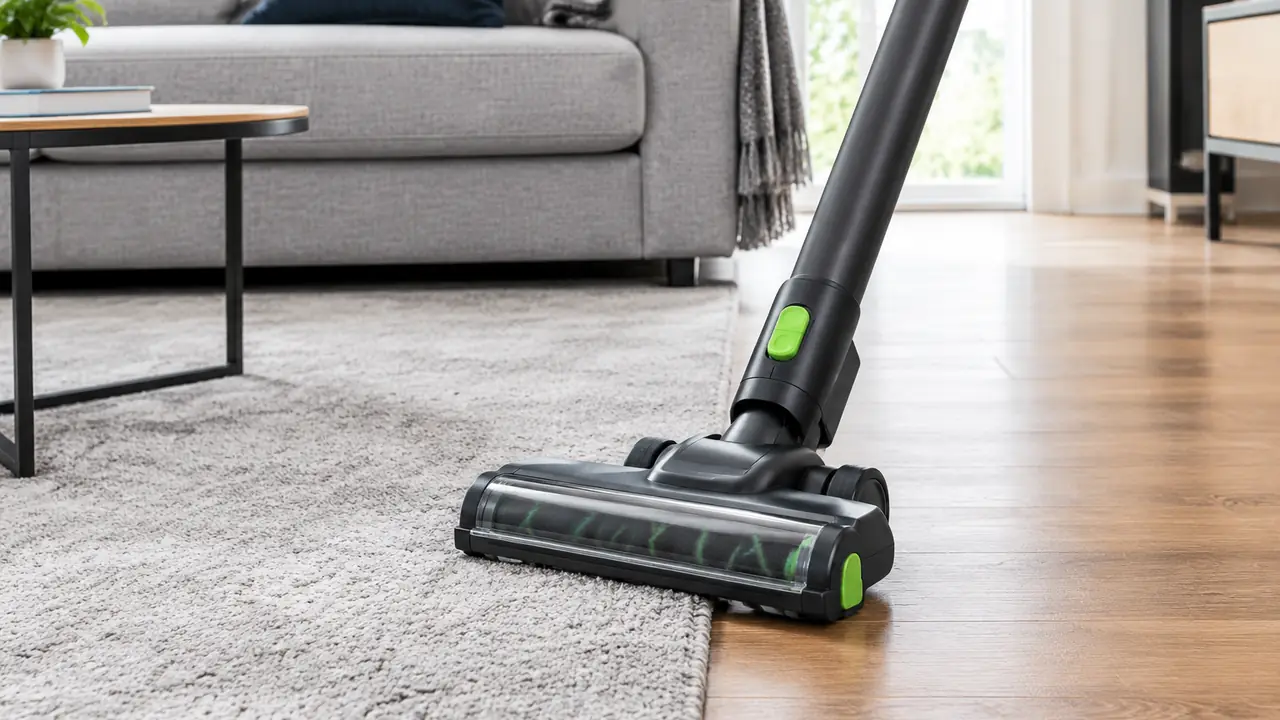
The constraints of a small mobile space
An RV, camper or boat has a handful of constraints that a household does not. Mains power is available only at a campsite or a marina, and even then the cable may not reach. Battery power on board is precious: a 12 V house bank is shared with lights, a fridge and pumps. Storage is measured in lockers, so a machine that does not fit a cupboard stays at home. Floors are mixed, with vinyl, carpet runners, upholstery, narrow gaps beside beds and, on a boat, bilge hatches and teak or non-slip decking. Moisture and salt are constant. The machine has to be small, light, fed by whatever power is on board, and tolerant of damp air.
These constraints lead to a short list of suitable types and to a set of details a buyer should specify. The automotive aftermarket page describes how a 12 V and accessory range is usually built, and the same planning applies here.
Power options on board
| Power | Format | Typical figures | Strength | Limit |
|---|---|---|---|---|
| 12 V accessory socket | Corded compact vacuum | About 60-150 W, long cord and hose | No runtime limit while the engine or house bank runs | Modest suction; draws from the vehicle or bank |
| Battery pack | Cordless handheld | 7.4-14.8 V, 5-15 kPa | No cable; quick to use | Short runtime; pack must be charged |
| Battery pack | Cordless stick | 21.6-25.2 V, 15-30 kPa, 30-60 min | Floors and stairs in a larger RV | Larger to store; charger needs mains or an inverter |
| Mains cord | Wet dry vacuum | 1,000-1,600 W, 20-80 L drum | Boat bilges and decks at a dock | Needs shore power; bulky |
The figures are typical across the category and are confirmed per model datasheet. A 12 V unit shares the vehicle's circuit, so ask the plant for the input current on the datasheet, and check the sockets in the target vehicles.
What suits an RV or camper
In a motorhome, the most useful machine is usually a cordless stick that detaches into a handheld, because it covers floors, steps and upholstery and stores upright in a corner. Where cabin floor space is small, a handheld with a long crevice tool and a soft brush is enough. A 12 V corded unit is a practical alternative for owners who prefer to use vehicle power and not recharge a pack. For larger RVs and for fleets of rental vehicles, a compact canister or a commercial machine stays at the depot and handles turnaround cleaning; see commercial vacuum cleaners. Sellers of RV accessories can bundle a handheld with a hose and tool set in a storage bag, which gives the product a clear place in a camper kit.
What suits a boat
A boat adds moisture, salt and sand. Wet dry capability is valuable for bilge spills and wet decks, and the wet dry vacuum line covers machines with a float valve and a drum. A compact 12 V wet dry unit can run from the boat's supply, and a small cordless handheld handles cabins and upholstery. Materials matter: stainless fasteners, corrosion-resistant switch contacts and a sealed motor compartment help, and plastic housings should be UV-stable for deck storage. The partner plant should say which parts are tested for splash or humidity, and the claim should be written as a stated test per project, not as a general promise. Hoses and tool sets in EVA or PVC are listed on the hose and attachments page.
Details that decide a purchase
- Cord and hose length. A cord that reaches every corner of the cabin from the socket, and a hose that bends around tight turns, matter more than motor power.
- Storage. A compact body, a carry bag with a place for each tool, and a hanging loop.
- Filter. A washable filter that is quick to remove; salt and sand clog fast.
- Tools. A narrow crevice tool, a soft brush, an upholstery head and an extension wand.
- Charging. A cordless unit needs a charger that works with the user's supply, such as an inverter or a 12 V adapter, which should be listed in the box.
- Noise. Small spaces amplify sound, so state the dB(A) figure and mode per IEC 60704-2-1; see the noise levels guide.
Range ideas for sellers and accessory brands
Mobile-living customers buy in kits. A seller can combine a compact handheld, a 12 V adapter, a crevice tool and a soft brush in one storage bag, then offer a second kit with a wet dry attachment for boats. A stick with a spare battery pack suits larger RVs where the owner cleans in several sessions. Private-label colours that match marine or camper-van styling make the product look at home on board, and a short manual with diagrams in several languages reduces returns from first-time owners. The desk coordinates the packaging partner for gift boxes and retail cartons, and the OEM and private label page sets out what can be customised. Seasonality matters as well: sales rise before the camping and boating seasons, so stock timing should be planned with the desk as described in seasonality and stock planning.
Compliance and shipping
Corded machines follow IEC/EN 60335-2-2 with IEC 60335-1, or UL 1017 in North America. Units with lithium packs need UN 38.3 transport testing and IEC 62133-2 or UL 2054 for the pack, and air freight follows IATA rules with the proper documents. A pure 12 V unit has no battery and ships more simply, which suits online sellers and accessory bundles. Documents are verified per project; the desk does not hold certificates, and the certifications guide lists the routes. Shipping options are on logistics and shipping.
Planning checklist
- Decide the power source on board: 12 V socket, cordless or shore power.
- Choose the format: handheld for cabins, stick for larger RVs, wet dry for bilges.
- Specify the tool set and storage bag before the motor.
- For boats, agree which parts are stated as splash or humidity tested for the project.
- Send quantities and markets through the quote form; reference MOQ and lead time ranges are on MOQ and lead time, confirmed in writing for each program.
For the household and car versions of these lines, see vacuums for stairs and cars.