
VC-00Vaculent vacuum cleaner sourcing desk
Vacuum cleaners from the Chinese cleaning-appliance clusters, with the bill of materials on the card
Vaculent is a vacuum cleaner sourcing desk. We coordinate partner plants and component makers in the Suzhou, Cixi, Shunde and Shenzhen clusters, write the part list of every line on one card, manage the certification route, check each lot before it ships and turn a brief into samples.
- 18lines across household, commercial and components
- 200-500 unitstypical start per stock model
- 6 partsnumbered on every BOM card
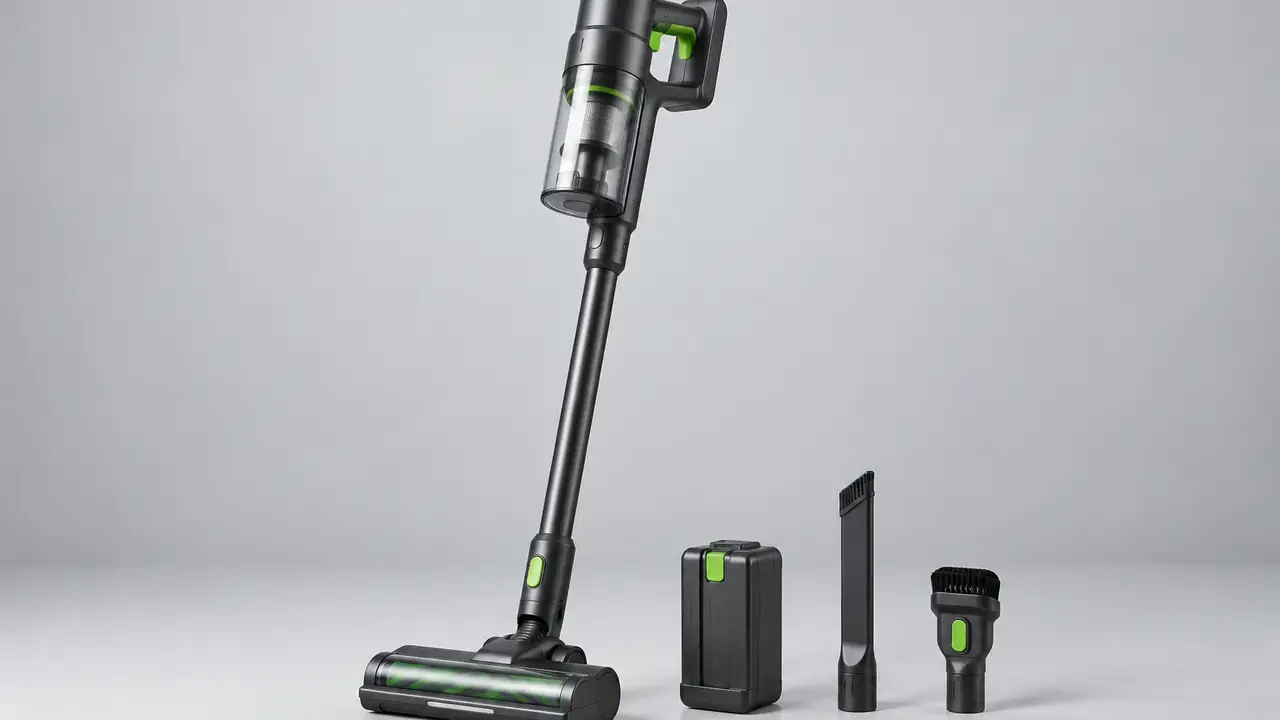
VC-002Bill of materials
| # | Part | Typical options | Custom |
|---|---|---|---|
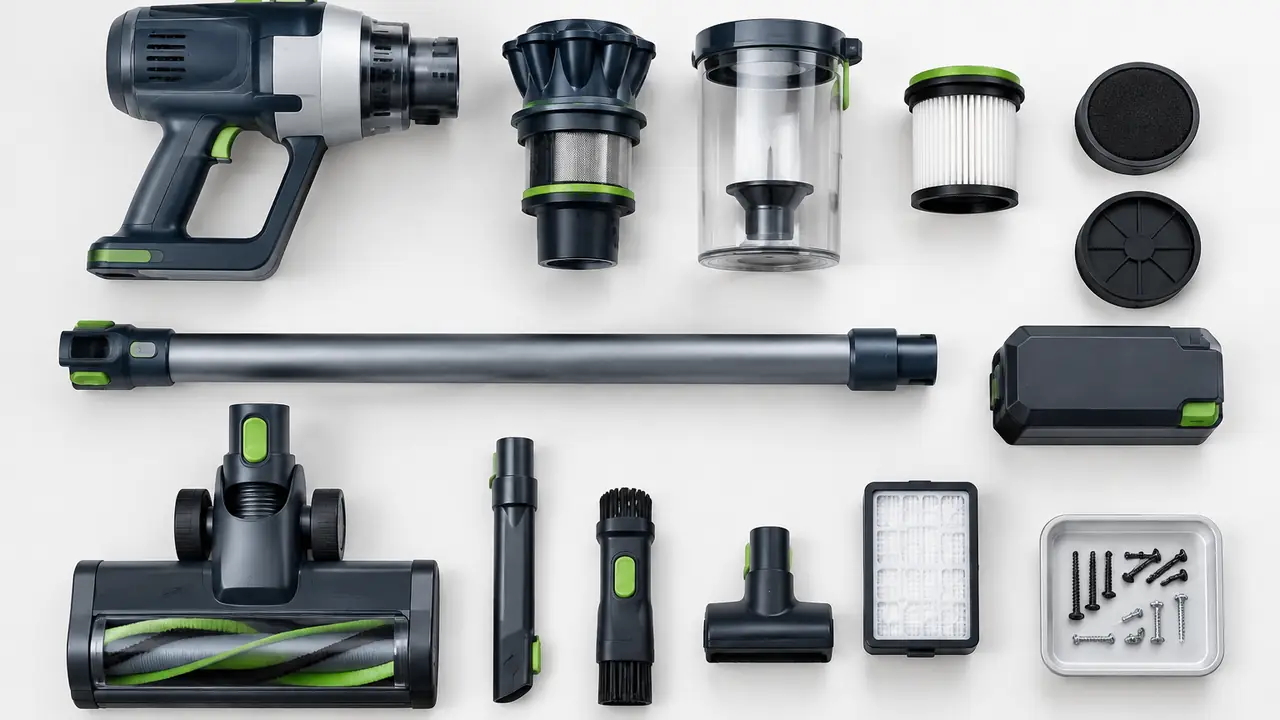
| 1 | Motor head and handle | Brushless DC motor 100-150 W, 90-120k rpm; trigger or latch switch | yes |
| 2 | Battery pack | Li-ion 21.6-25.2 V, 2,000-4,000 mAh, 6-7 cells 18650 or 21700, BMS | yes |
| 3 | Cyclone and filter | Single or multi-cyclone; washable pre-filter plus HEPA H12-H13 post-filter | yes |
| 4 | Dust bin | 0.5-1.0 L transparent PC or ABS, one-touch release | yes |
| 5 | Brush head | Motorised 20-30 W, 220-260 mm wide, bristle, fluffy or anti-tangle roller; LED optional | yes |
| 6 | Wand | Aluminium tube 580-680 mm, fixed or telescopic, quick-release | no |
Part list of a typical unit in this line. Options and custom items are confirmed on the program sheet.
Reference ranges
- Suction
- 15-30 kPa (entry 10-20 kPa)
- Runtime
- 30-60 min, 10-20 min in boost
- Battery
- 21.6-25.2 V, 2,000-4,000 mAh
- Noise
- 65-80 dB(A)
- Dust bin
- 0.5-1.0 L
- Charge
- 3-5 h, dock or wall mount
Typical ranges seen across the category, not a datasheet. Values are confirmed per model.
Most buyers start with one machine and quickly need more: a brand that launches a cordless stick is asked for a robot version; a retail chain that lists an upright wants a handheld at a lower price point; a cleaning contractor that buys backpack vacuums needs spare filters and battery packs for years. Running each item through a different plant means different motors, different test methods and no single record when a lot behaves differently from the sample.
This desk keeps the range in one place: household machines, commercial and industrial machines, and the components inside them. One bill-of-materials card per line, one inspection record per lot, one person accountable for the program.
Each line page carries its BOM card: an exploded sketch with six numbered parts, the options a plant will ask about for each part, which parts can be customised, and the reference ranges for suction, airflow, runtime, noise and capacity. Start with what a vacuum cleaner is made of if the category is new to you.
The same cordless stick sells differently in a brand catalogue, a retail chain and a marketplace listing, and a hotel buys a different machine again. These are the programs built most often, each with the formats, documents and spare-part plans that channel tends to need.
Chinese vacuum cleaner making is concentrated in a few places. Suzhou in Jiangsu is the centre for floor-cleaning appliances: local press reports put about seven in ten of the world's floor-cleaning machines in the city, with a complete chain of motor, battery, precision-part and whole-machine plants around Wuzhong district, and Jiangsu exported RMB 15.9 billion of vacuum cleaners in 2024 according to customs figures reported by Securities Times. Cixi in Ningbo is the small-appliance capital with more than 2,000 whole-machine makers; Shunde in Foshan has over 3,000 appliance firms with most parts within 50 kilometres; Shenzhen and Guangzhou hold the robot-vacuum ODM plants and the commercial cleaning-machine builders. The desk shortlists plants per line and per power type rather than routing everything to one supplier. See industry clusters and how plants are audited.
Vacuum quality shows up in things you can measure: suction and airflow at the nozzle against the datasheet, input power, noise, runtime and charge time for cordless lines, dust capacity, the hi-pot and ground tests the safety standard requires, drop and cord-flex endurance, filter efficiency on sampled units, and the fit of every cosmetic part. The inspection plan is agreed before production and the record goes out with the lot. Read quality control and testing and inspection.
Beyond matching lines to plants, most programs need some of the following. Each page explains how it runs and what is confirmed in writing.
A vacuum cleaner is an electrical appliance first. Household and commercial machines are tested to IEC/EN 60335-2-2 with the general rules of IEC 60335-1; North America uses UL 1017 through a UL or ETL listing. Mains-operated household vacuums sold in the EU fall under the ecodesign regulation 666/2013, which caps rated input power and sets dust pick-up and motor-life rules, while cordless machines sit outside it. Cordless lines add UN 38.3 transport tests and IEC 62133-2 or UL 2054 for the battery pack; robots with Wi-Fi add CE RED or FCC. Filtration is stated by EN 1822 grade, H13 being the usual HEPA level. Vaculent holds none of these certificates itself; partner plant documents are verified per project. Read the certifications guide and compliance, or send the brief to the quote form.
Send the lines you need, target specs, the quantity per model and your market. The desk replies in writing with matched plants, a bill-of-materials sheet, certification routes and the reference MOQ.
Request a quote