
Two small-space jobs with different demands
Stairs and cars look alike on paper: both need a light machine, a crevice tool and a short reach. In practice they differ. A staircase is a repeated, physical task in the home. The user carries the machine up and down, cleans narrow treads and risers, and often wants to switch between the stair and the floor below without changing tools. A car interior is a one-off, detailed task in a confined space: seats, mats, door pockets, gaps beside the console. Weight matters in both, but runtime and cord length shape the choice in different ways.
For a range planner this means that one platform can serve both uses only if the power source, the nozzle set and the packaging are chosen with both buyers in mind. The automotive aftermarket page describes how a car range is usually built, and the same logic applies to stair cleaning in the household range.
Types that suit stairs
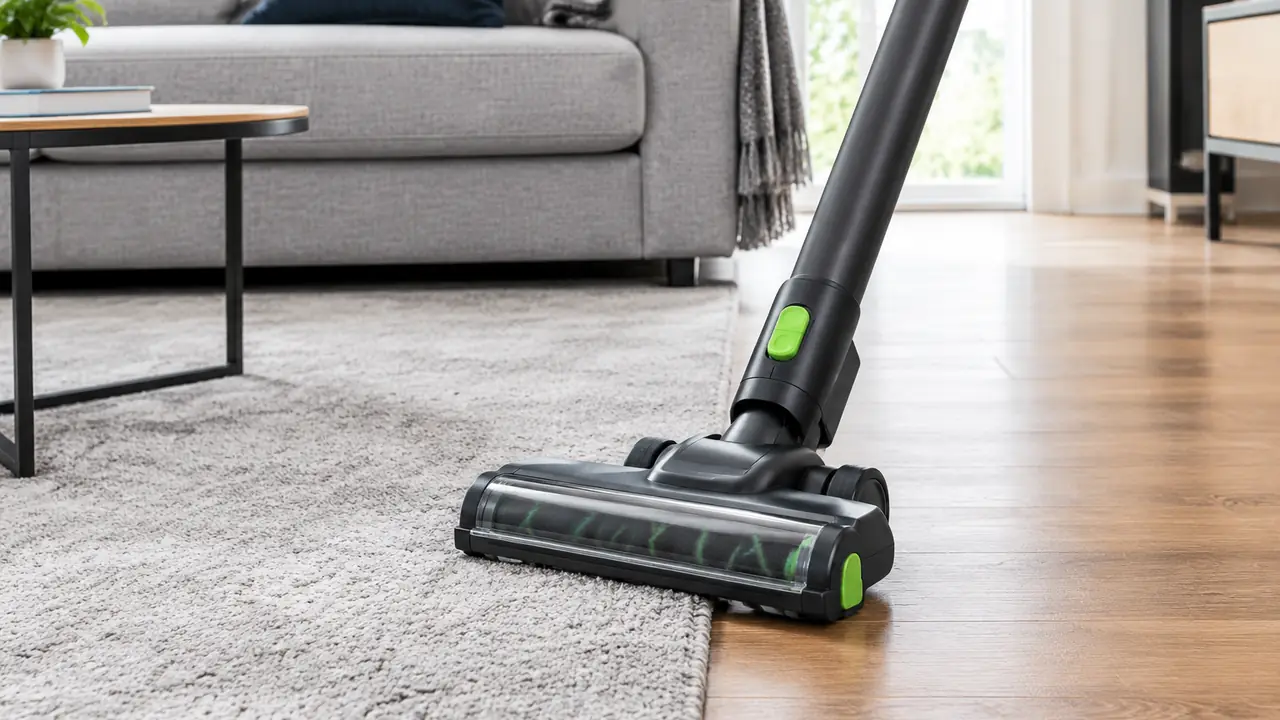
- Cordless stick with a detachable handheld. The main body detaches from the wand and becomes a handheld unit. Typical sticks quote 15-30 kPa sealed suction and 30-60 minutes of runtime, with 21.6-25.2 V packs. This is the usual stair machine in homes with several floors. See cordless stick vacuums.
- Handheld with a motorised mini-head. Lighter, with a typical 7.4-14.8 V pack and 5-15 kPa suction. It covers one flight comfortably but fatigues on a full staircase. See handheld vacuum cleaners.
- Robot vacuums do not climb stairs. Some models can be carried between floors with saved maps, but stair treads remain a manual task. Robot vacuum cleaners are better planned as a separate line.
- Corded canisters can be placed on a landing and used with a hose and a stair tool. They are heavy on the stairs but offer large bags and no runtime limit.
Types that suit cars
Car owners and service staff choose among three power options. A 12 V unit plugs into the vehicle's accessory socket, typically draws about 60-150 W, and comes with a long cord and a hose, so runtime is not limited, but suction is modest and the cord must reach the far seat. A cordless handheld has no cord and a short runtime that is set by a pack typically rated 7.4-14.8 V. A cordless stick with a small crevice kit is common among valeting services that already own one. A wet dry vacuum is used in garages for mats and spills. The wet dry vacuum line covers those.
| Use | Type | Power | Typical figures | Tool set to specify |
|---|---|---|---|---|
| Stairs, home | Cordless stick, detachable | 21.6-25.2 V pack | 15-30 kPa, 30-60 min | Motorised mini-head, crevice, upholstery |
| Stairs, light use | Handheld | 7.4-14.8 V pack | 5-15 kPa | Crevice, brush, mini-head |
| Car, owner | 12 V corded | Accessory socket, 60-150 W | Long hose, no runtime limit | Crevice, brush, extension hose |
| Car, valeting | Cordless stick or handheld | Battery pack | Per model datasheet | Crevice, upholstery, pet brush |
| Garage mats, spills | Wet dry | Mains cord | 1,000-1,600 W, 20-80 L tank | Wide floor tool, squeegee |
All ranges are typical across the category and are confirmed per model datasheet.
Nozzles and tools make the product
Small-space machines are bought for what they can reach. A short crevice tool, a long flexible hose, a soft brush for dashboards and a small motorised head for seats are what a customer notices, long before they read a kPa figure. Hoses and tools come in EVA or PVC, aluminium or plastic wands, and telescopic or fixed lengths. Each has trade-offs in weight, flexibility and durability, which the hose and attachments page sets out. A good kit is also easy to pack: a soft carry bag, a labelled slot for each tool, and a short manual with diagrams reduce returns because customers can find what they bought.
Stair-specific details
For a stair machine, four details matter more than the headline suction. The first is weight distribution, which affects wrist load when the machine is held at arm's length. The second is the tool that cleans a tread edge: a narrow motorised head or a combination crevice and brush. The third is a lock that holds the main body on the wand at an angle and releases quickly into handheld mode. The fourth is a dust bin that empties cleanly without a trip back to a bin, because users clean stairs at the end of a chore, not at the start. These are plant-level choices that need to be settled before moulds are cut.
Car-specific details
For a car machine, the points that decide reviews are cord length on 12 V units, which should reach the boot from the front socket; a filter that is easy to remove and rinse, since car dust includes sand and grit; and a hose long enough to reach the back seat footwells. Noise matters less than in a home, but vibration and a loose plug do. A 12 V unit should be tested with the vehicle fuse rating in mind, since the vehicle's accessory socket is fused and that limits the continuous draw. The desk asks partner plants to state the input current of a 12 V model on the datasheet.
Batteries and shipping
Cordless handhelds and sticks carry lithium-ion packs, so UN 38.3 transport testing and IEC 62133-2 or UL 2054 pack safety apply, and air freight needs the right documents under IATA rules. A 12 V unit has no battery and ships more simply, which is one reason it is a common entry product for online sellers. Corded mains units follow IEC/EN 60335-2-2 or UL 1017. The certifications guide sets out the routes, and partner documents are verified per project. Courier-friendly cartons and sample timing are covered under logistics and shipping.
Planning checklist
- Decide which buyer leads: household stair cleaning or car owners. Bundle sets for the other.
- Pick the power source: cordless for flexibility, 12 V for cars with no runtime limit.
- Specify the tool set first and the motor second.
- Ask for runtime in normal mode and for the input current of any 12 V model.
- Plan filters and, for cordless, battery packs as spare parts.
- Send volumes and markets through the quote form; reference MOQ and lead times are on MOQ and lead time, always confirmed in writing for each program.