
How a chain thinks about a vacuum range
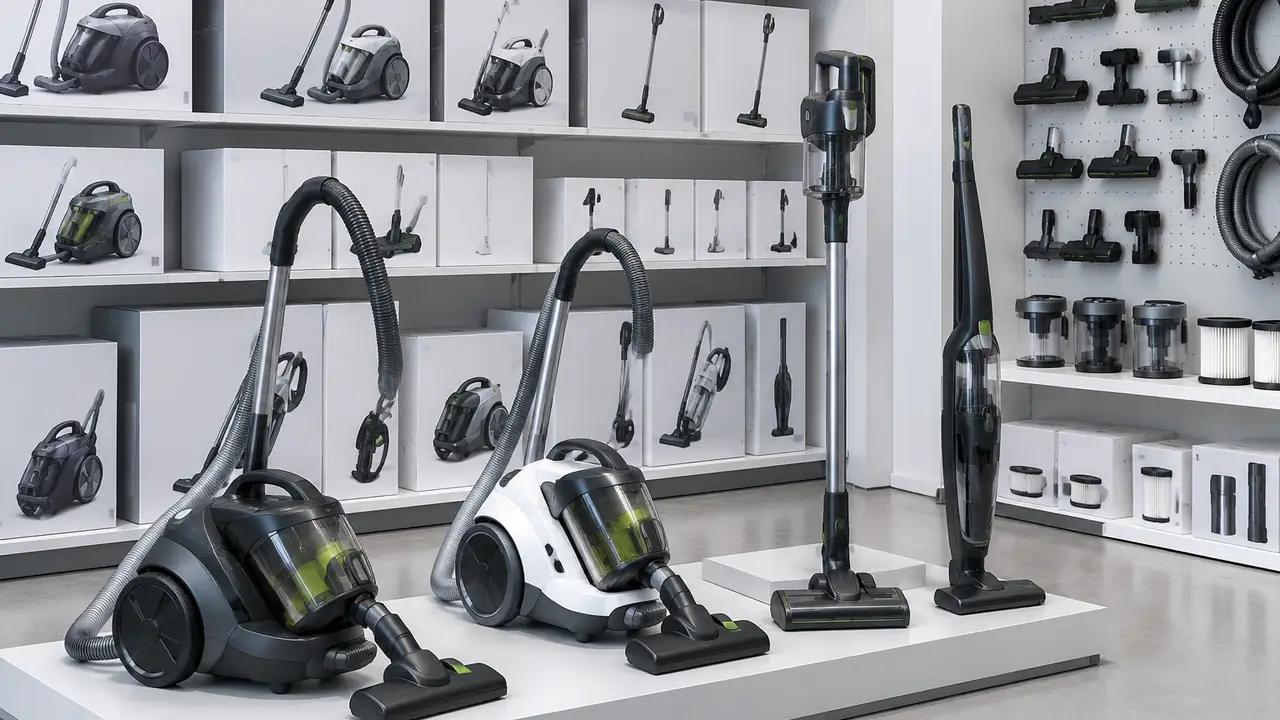
A chain does not ask which vacuum is best; it asks which three or four models fill the shelf at clear price steps without overlapping. Own label helps because the chain controls margin, the name and the warranty. It also moves risk to the chain: if a model fails in the field the chain, not the plant, answers to the customer. The desk coordinates partner plants in the Cixi cluster, where corded uprights and canisters are concentrated, in Suzhou for cordless handhelds and in Shunde for components, and it plans the range with spare parts, packaging and inspection from the start. Typical routes are described in OEM and private label.
Planning by price band
The three bands below are a planning frame, not price advice; Vaculent does not quote prices on this site. Each band changes the motor, the brush and the filter more than the housing.
| Band | Line focus | What usually changes between bands |
|---|---|---|
| Entry | Corded canister or upright, basic handheld | Brushed motor, foam filter, plain accessory set, standard colour box |
| Core | Upright or canister with washable filter; handheld with 7.4-14.8 V pack | Better filter, more accessories, longer cord, quieter motor housing |
| Premium | Upright with driven brush roll; canister with HEPA H12-H13; handheld with higher-capacity cells | HEPA grade, LED head, tool storage, gift-quality packaging |
Keep the platforms few. Two housings with three feature levels each are easier to inspect, stock and repair than six unrelated models. A shared filter or bag across bands also cuts the spare parts range.
Markets change the corded range
Corded canisters are the European staple and corded uprights the North American one. In the EU, a mains-operated household vacuum falls under ecodesign Regulation 666/2013, which sets a rated-power ceiling below 900 W, annual energy use and a motor-life requirement. The 665/2013 energy label was annulled in 2018, so a chain should not expect it on pack. For North America the route is UL 1017 through UL or ETL. These are planning items to be verified per project; see EU ecodesign 666/2013.
Shelf-ready packaging
Retail packaging is more than a pretty box. It must survive a pallet, a warehouse and a stock room, and still look right on a shelf. Specify the carton drop test, the barcode position, the market labels (voltage, plug, language, recycling marks) and whether the master carton is shelf-ready or display-ready. Agree pallet pattern and carton count with the chain's logistics team before artwork is final. The desk reviews artwork proofs against the approved certificate data, so a model name on the box matches the model on the report. See packaging vacuum cleaners for export.
Spare parts and after-sales
A chain must be able to sell a filter or a bag for the life of the range. Plan the parts list with the first order: filters, bags, brush rolls, hoses, batteries, chargers and cords, each with its own part number and carton. Typical practice is to order a small spare batch with the first shipment and agree a re-order route and a minimum time that parts remain available. Warranty returns are best handled by a written fault-handling rule: what the chain tests, what is sent back and how credits are agreed. See after-sales planning.
An illustrative example
As an illustration only, imagine a regional chain that wants a four-model own-label range for its spring promotion. It chooses a corded canister and a corded upright for the entry and core bands, plus two handhelds on a shared 14.8 V pack. The desk shortlists two partner plants, one for the corded pair and one for the handhelds, and asks each for a signed specification sheet, a branded sample and the safety reports for the exact models. The chain approves artwork proofs, orders a small spare-parts batch with the first shipment, and sets a pre-shipment inspection date eight weeks before the promotion. Nothing in this sketch is a real customer or a promised result; it shows the order of decisions.
Inspection that fits a store calendar
- Sample approval against a signed specification sheet before the order.
- In-process check at mid-production on sampled units: suction, noise, safety test routine.
- Pre-shipment inspection of cartons, labels, barcodes and accessory contents.
- Photo and report to the chain before the container is released.
Seasonal peaks set the deadlines, so the lead times on MOQ and lead time are worked back from the shelf date. All figures are typical ranges, confirmed in writing for each program. Start a range plan with the quote form.