
Why pet owners form a category
A pet owner has a recurring, visible problem: hair on floors, sofas and stairs, and dirt carried in on paws. That leads to frequent use, higher wear on the brush roll and filter, and a high interest in accessories. For a retailer, it means a shopper who compares features, reads reviews and replaces consumables, which is the kind of customer who supports a range of three or four models with an accessory aisle. For a brand, it means a category where a product has a clear job, so listings can be written around the use rather than around raw numbers.
A pet-owner vacuum is rarely a new architecture. It is usually a cordless stick, an upright or a handheld with a set of changes: a brush roll that sheds hair, a larger or easier-to-empty bin, a filter set that holds fine particles, and tools that reach furniture. The pet hair vacuum line is built from those changes, and range planners can specify them on a platform they already use.
The specification set that defines the category
| Feature | What to specify | Typical across the category |
|---|---|---|
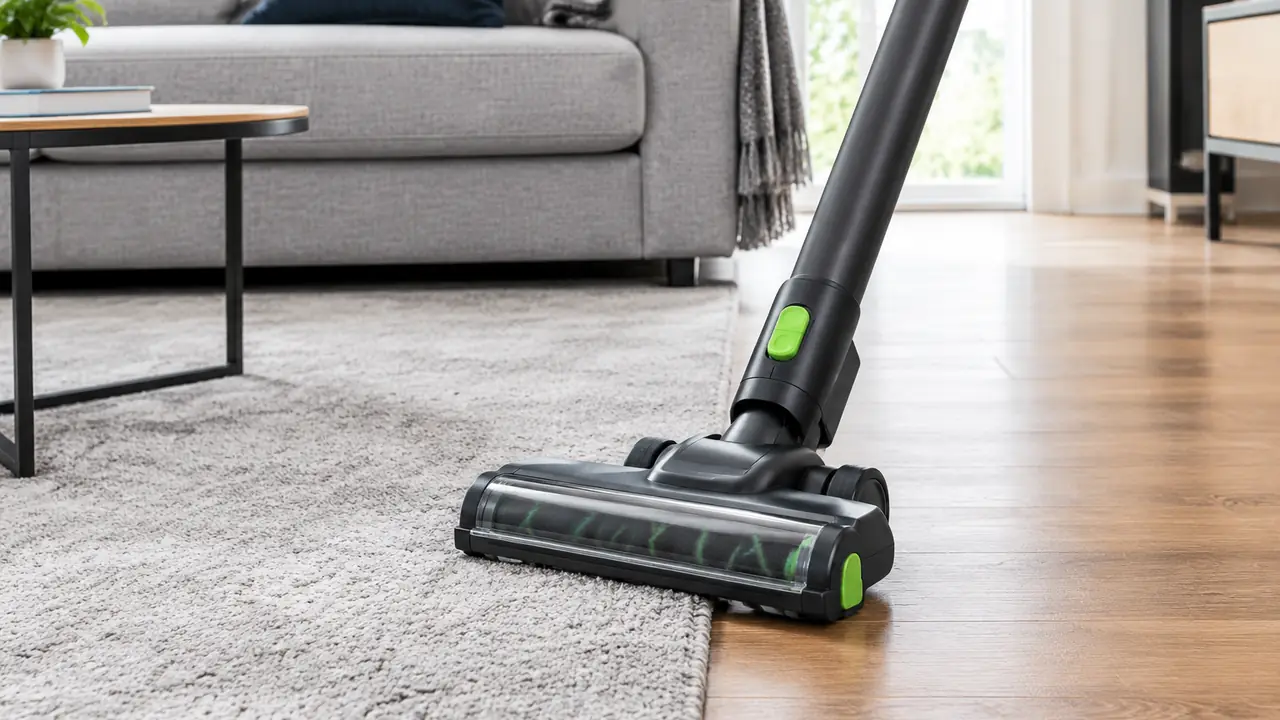
| Brush roll | Anti-tangle design that sheds hair, with a comb or cut-away | Combination or fluffy rollers; see brush rolls |
| Suction | Enough airflow to lift hair from fabric | Cordless stick 15-30 kPa; handheld 5-15 kPa |
| Runtime | Normal-mode figure, not boost | 30-60 min on 21.6-25.2 V packs |
| Bin | One-touch emptying, hair release, clear window | Per model datasheet |
| Filter | Pre-filter plus pleated or HEPA stage written by EN 1822 grade | H11-H14 under EN 1822 |
| Tools | Motorised mini-head, crevice, upholstery, de-mite head | See hose and attachments |
| Noise | State the figure and the mode, since some pets dislike loud machines | About 65-80 dB(A) for cordless sticks |
Figures are typical across the category and are confirmed per model datasheet.
Staging a good-better-top range
A retailer typically wants three steps with clear differences that a shopper can explain at the shelf. The sequence below is one way to organise the specification, not a fixed template.
- Entry. A handheld or a lighter cordless stick, with a fluffy or combination roller, a washable filter and a basic tool set. It targets small homes and second-vehicle cleaning.
- Middle. A cordless stick with an anti-tangle roller, a motorised mini-head and a longer runtime pack. This is where most volume sits.
- Top. The same stick or an upright with a stronger brush drive, a HEPA-class stage written by its EN 1822 grade, a self-emptying or easy-empty bin, and a full tool kit. A robot vacuum with a dock may sit alongside as a separate line for daily upkeep.
Differences between steps should be visible in the box: a roller type, a tool, a filter grade. A shopper who can see why the next step costs more is less likely to buy the wrong one and return it.
Filtration language that holds up
Pet-owner marketing often leans on filtration. The safe way to write it is plain: state the filter grade under EN 1822, for example H13 for at least 99.95% capture at the most penetrating particle size, say that the grade describes the filter media, and confirm in the manual that the machine has a sealed airpath. Avoid wording that suggests a health outcome. The filtration grades guide explains what each grade says, and HEPA vs standard filter vacuums sets out when the grade matters in retail.
Hair, wear and spare parts
Hair wraps on rollers and bearings, and pets shed fine fur that loads filters. The result is that the brush roll, the filter and the bin seal wear faster in pet homes than elsewhere. Plan for it. A retailer who stocks replacement rollers, filter sets and battery packs earns repeat sales and reduces returns, because a customer who can find a part will not give up on the machine. A parts list with stable codes, printed on the carton and in the manual, makes the aisle easy to run. The warranty and spare parts note gives a planning outline, and the spare parts business note covers the commercial side.
Listing and shelf content
Pet owners read before they buy, so the listing should answer the questions they ask. Show the roller after a pass through long hair, state the bin capacity per model datasheet, list the runtime in normal mode, and name every tool in the box. Photographs on sofas, stairs and car seats show the range of use better than a table of figures. Keep one format across the three models so the shopper can compare them quickly. The listing content note sets out which specifications buyers actually read, and consistent claims lower the return rate that follows an over-promising page.
Packaging and bundles
The carton for this category is a sales tool. A cutaway or window showing the roller, an icon strip for runtime, filter grade and tool set, and a short list of what is in the box help the shopper compare. Bundles of a stick with an extra roller and a spare filter, or a handheld with a de-mite head, raise the average sale without changing the machine. The desk coordinates the packaging partner for retail boxes, drop tests and shelf-ready cartons; for the planning of private-label ranges with chains see retail chains and OEM and private label.
Compliance in brief
A corded upright follows IEC/EN 60335-2-2 with IEC 60335-1, UL 1017 in North America, and in the EU ecodesign 666/2013 for mains-operated household vacuums. A cordless stick or handheld needs UN 38.3 and IEC 62133-2 or UL 2054 for the pack, and a robot with Wi-Fi adds CE RED and FCC. The desk does not hold certificates; documents come from the partner plant and are verified per project. See the certifications guide.
Planning checklist
- Choose the platform: cordless stick for most, upright for carpeted markets, handheld for entry.
- Specify the roller, bin and tool set that define the pet version.
- Write the filter as an EN 1822 grade, with no health wording.
- Stage three models with differences visible in the box.
- Plan rollers, filters and packs as repeat items.
- Send markets and quantities through the quote form; reference MOQ and lead time ranges are on MOQ and lead time and are confirmed in writing for each program.