
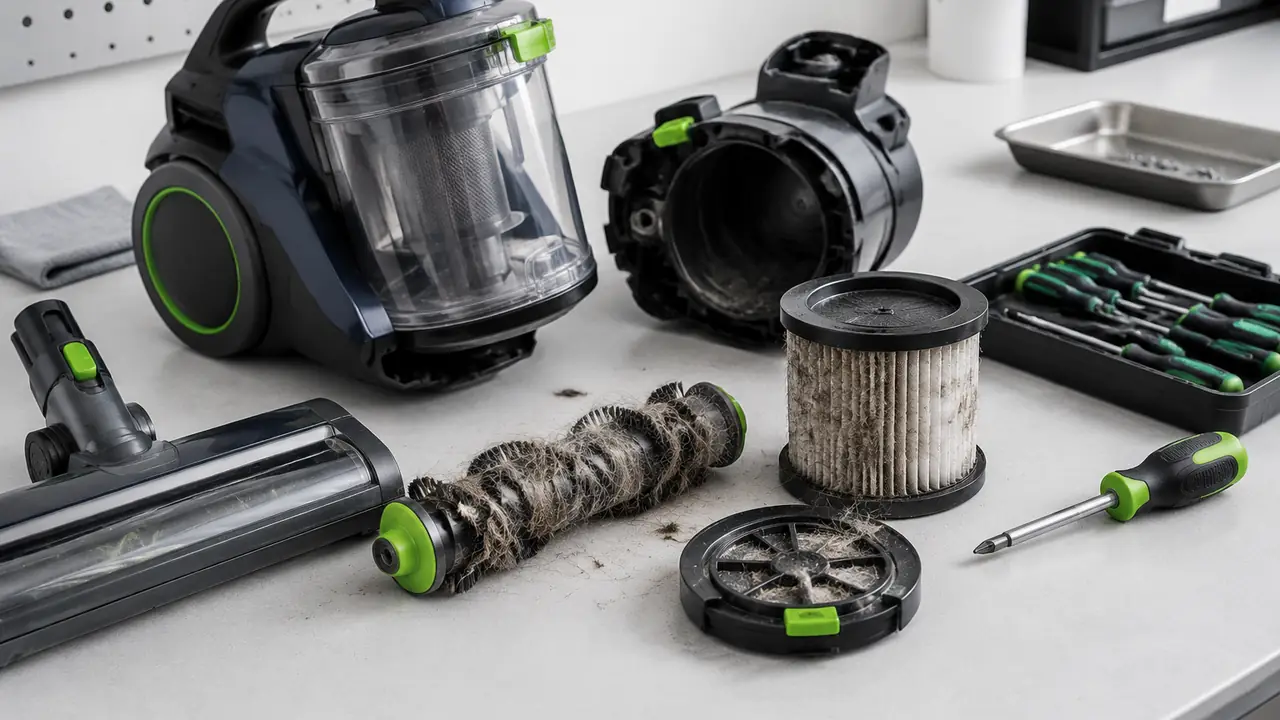
Start from the failure list
A warranty is a promise about failure, and a spare parts plan is its practical half. Both should start from the failure causes of the product type, not from a number copied from a competitor. The notes in this group show a pattern: the most frequent causes are blockages, filters and bins, which are maintenance; next come leaks, belts, brush rolls and contacts, which are wear and assembly; and the least frequent but most expensive are motors, battery packs and boards. Warranty and parts plans differ for each band.
The desk suggests that the brand writes the failure list before it writes the warranty text, with an estimate of the share of each cause based on the product type and, once sales begin, on actual returns. The list is then the basis for what to stock, what to repair, and what to replace.
Three tiers of parts
| Tier | Parts | Typical behaviour | Plan |
|---|---|---|---|
| Consumables | Filters, bags, belts, side brushes, mop pads | Replaced by the user on a schedule | Sell as accessories, stock deep, ship with the first batch |
| Wear and fit parts | Brush rolls, hoses, nozzles, gaskets, float cages, wheels, charging contacts, adapters | Fail through use or damage | Stock moderate, ship to customer without a return where possible |
| Core modules | Motor, battery pack, controller board, brush head, dock | Rare failure, high cost | Stock small, repair or replace unit under warranty, require plant support |
The first tier is also a sales line. Filters and bags are a repeat purchase, and a brand that does not supply them leaves the market to generic parts that may not fit or filter as designed. The second tier determines whether a small fault becomes a return. The third tier is where the contract with the partner plant matters most.
What the warranty should say
- Period and coverage by component: the machine, the battery pack and the charger often have different periods in the market.
- Exclusions that follow from the failure list: consumables, wear parts, damage from blockages or unsuitable liquids, and use outside the intended environment.
- Proof and process: serial numbers or batch codes, photographs of the filter and brush, a standard return form with reason codes.
- Remedy: parts shipped to the customer, repair at a service point, or replacement.
- Local requirements: consumer-law minimums differ by market, and the brand should check them for each destination.
The desk does not provide legal advice on warranty text. It supports the brand with the product-side facts: which parts exist, which are replaceable, and what the partner plant will commit to in writing.
Plant commitments to ask for
- A spare parts list with drawings, part numbers and a lead time per part, for the life of the line.
- A defined supply period for each core module after end of production, stated in months or years and confirmed in writing for each program.
- A defect allowance: a share of units or parts shipped with the batch as spares, agreed per order, with the basis written down.
- A change-notification clause for motors, cells, BMS, thermal devices, filter media and gaskets.
- Failure analysis support: the plant examines returned units from a defined sample and reports root cause by category.
- Batch traceability, so that a defect can be linked to a production lot, a component lot or a shift.
Sizing the first parts order
The first order of spares is a judgement, not a formula. A working approach is to divide the parts by tier. Consumables are sized by the expected number of units in the field and the replacement interval in the manual. Wear and fit parts are sized by the estimated share of units that will need them in the first year, taken from the failure list. Core modules are sized small, with the plan to repair or replace units. Components and parts MOQ is usually counted in thousands for items such as filters and battery packs, while smaller items can be ordered in lots set by the plant, always confirmed in writing for each program. The reference quantities and timing are on MOQ and lead time. Parts can ship with the main order, which saves freight, or in a second shipment once early return data is available; for lithium packs, transport rules in logistics and shipping apply.
Keeping the data loop closed
A parts plan only improves if the numbers come back. Each quarter, the brand can summarise returns and parts orders by cause, split into maintenance, wear, assembly and core module failures, and send the summary to the desk and the plant. Rising belt orders suggest a belt grade question. A cluster of charging complaints in one production month points to a batch. A steady stream of filter orders is healthy and shows the accessory line is working. With this loop the second order of spares is sized on evidence, the plant can fix causes at source, and the next specification starts from a better failure list than the first one did.
Where design reduces the plan
Good specification shrinks the parts problem before it starts. A filter that is easy to remove is more likely to be cleaned. A brush head that opens without tools lowers hair-wrap failures. A hose joint with a larger bore blocks less. Contacts with better plating cut charging faults. A bin with a visible max line reduces overfilling. Each of these costs little at the sample stage and a lot after launch. The more of these the brand can settle in the spec, the less it has to hold in stock, and the cleaner the return data becomes.
Related component pages include battery packs, motors, filters and brush rolls, which can also be sourced as parts lines.
Tie it back to inspection
Return rates are the sum of design, parts and production quality. Pre-shipment inspection addresses the third: a random sample, checked against the approved sample and against a written list of defects, with acceptance limits agreed for each order. The list should mirror the failure causes in this group: airflow and leak checks, thermal and noise checks, charging and contact checks, brush function, filter fit and float function for wet dry units. Defects found at inspection cost far less than defects found in the market. See testing and inspection, and plan the parts and quality terms for your line through the quote form.