
Start from the datasheet, not from the competitors
The fastest way to write a weak listing is to copy the numbers of a competitor and adjust them. The fastest way to write a strong one is to request the partner plant's datasheet, ask what test method produced each figure, and then write only what the datasheet supports. A datasheet gives the base values: input power, voltage, battery capacity, suction, bin volume, weight, noise and the filter. A good plant also provides the method, the measuring distance for noise and the mode used for runtime. If a number has no method behind it, leave it out or label it clearly as a nominal value.
The reference ranges across the category are useful to check plausibility. Cordless sticks commonly show 15-30 kPa sealed suction, entry models 10-20 kPa; runtime of 30-60 minutes from 21.6-25.2 V packs of 2,000-4,000 mAh; noise of about 65-80 dB(A). Robots commonly show 2,000-6,000 Pa and 90-180 minutes from 2,600-5,200 mAh. Handhelds show 5-15 kPa. A figure far outside the range is a reason to ask questions, not to print it.
The specs shoppers compare
| Spec | How to word it | Ask the plant for |
|---|---|---|
| Suction | State kPa or Pa and mode, for example sealed-nozzle suction in max mode | Test method and power mode; airflow if available |
| Runtime | State minutes per mode and with which head; note that boost is far shorter | Test conditions, battery state, charge time |
| Noise | State dB(A) with measuring distance and mode | Method such as IEC 60704-2-1 and the report |
| Bin or bag capacity | State nominal volume in litres | Usable capacity and indicator type |
| Weight | State total weight in the main configuration and in handheld mode | Weight with and without battery |
| Filtration | State the filter stages and EN 1822 grade by name where applicable | Test report for the filter media |
| Battery | State voltage, capacity, removable or fixed, charge time | Cell format, BMS functions, transport documents |
| Accessories | List each tool in the box with a photograph | Packing list matching the carton |
The meaning of each number is explained in how to read vacuum specs, and the guides on suction and airflow and noise levels help with careful wording.
Wording that avoids problems
- Say what was measured. Write sealed-nozzle suction of a stated figure in a stated mode, instead of strongest suction.
- Avoid absolutes. Words such as best or unbeatable, and health promises about allergies, invite complaints and, in some markets, regulatory attention. Describe the filter by its grade instead.
- Use the right filter wording. EN 1822 H13 means at least 99.95% capture at the most penetrating particle size on a test rig. Do not use medical-sounding wording or germ-killing claims, which a test report on the filter media does not support.
- Separate boost and normal runtime. A single large number that applies only to eco mode on a hard floor misleads buyers.
- Name what is in the box. Missing or mismatched accessories are a frequent cause of reviews that mention disappointment, so the listing photograph and the packing list should agree.
- State battery details honestly. Include removable or fixed, and note that capacity falls with age as with all lithium products.
Compliance content to prepare
Marketplaces and retail buyers ask for documents before they list. The requirements depend on the product. A corded household machine for the EU needs CE conformity, with the EU ecodesign regulation 666/2013 applying to mains household vacuums; a cordless model needs battery transport and safety documents; a robot with Wi-Fi needs radio approval, CE RED for Europe and FCC for the United States. Standards are cited by name: IEC/EN 60335-2-2 and UL 1017 for safety, UN 38.3 and IEC 62133-2 for batteries. The partner plant holds the reports, and the desk verifies them per project. A page should only show a mark if the model really carries it, and the report should be in the seller's file before the page goes live. The certifications guide lists what each market asks for.
Images, manuals and the first screen
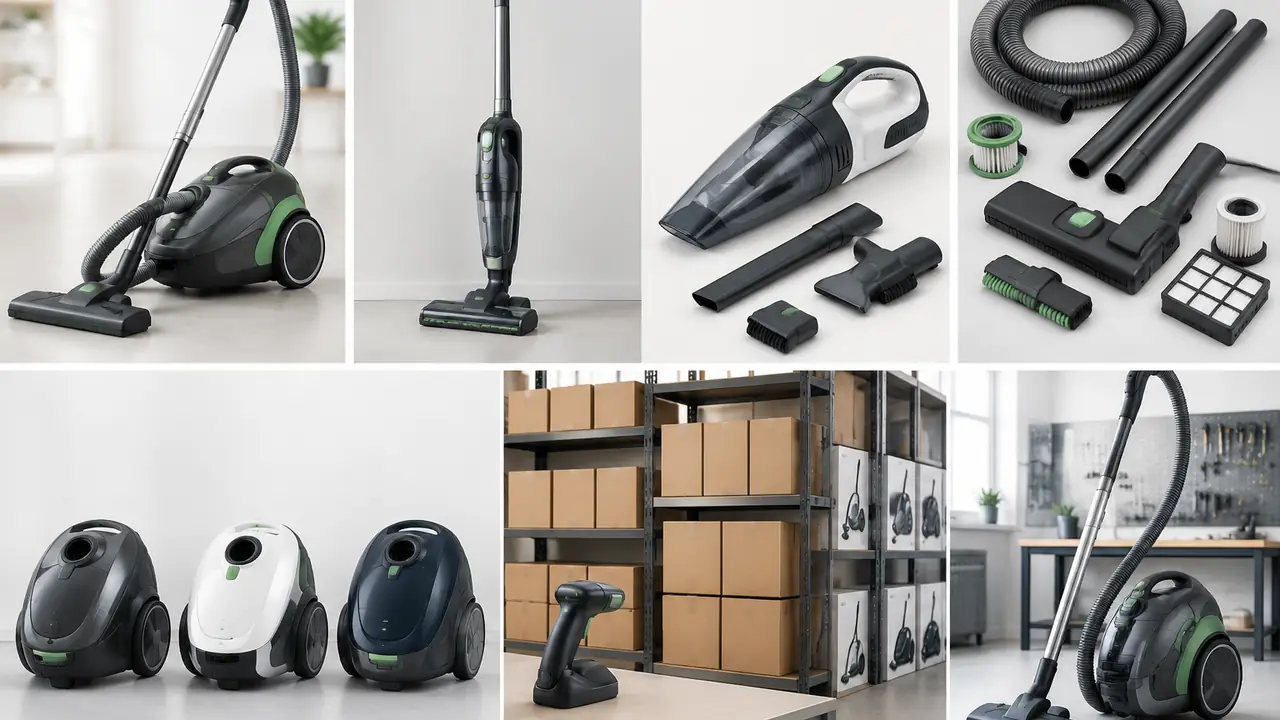
Shoppers decide on the first screen. Use clear photographs of the machine in each configuration, the bin being emptied, the brush head, the filter and every accessory. Add a dimensioned drawing, a size comparison and a short video if the plant can supply one. A manual written in plain language, with pictures for filter cleaning and brush removal, lowers returns more than a better headline does. Ask the plant for the source files of manual and packaging artwork early, so the brand can edit them. More on how the box and the manual support the listing is on the packaging and retail boxes page.
Keeping the page and the product in step
A listing is a promise that has to survive the first production batch. Specifications drift between samples and mass production: a supplier changes a cell, a motor variant or a filter, and the page no longer matches the box. To prevent this, agree a change-notice rule with the plant in writing, so that any change to a part that appears on the page is reported before shipment. Keep a golden sample from the approved batch, photograph it, and compare each shipment against it during pre-shipment inspection. Update the page whenever the datasheet changes, and keep the earlier versions on file so that a customer question about an older unit can be answered accurately. Small habits like these cost little and protect the brand when a marketplace or a retail buyer asks for proof of a claim.
It also helps to keep a short internal sheet for the sales or support team: the five numbers customers ask about most, the accessory list, the replacement interval for filters and the steps for emptying and cleaning. When support answers match the page, complaints about misleading content fall.
A listing preparation sequence
- Collect the datasheet, test methods, accessory list and certification documents from the plant.
- Check each figure against the category ranges above and ask about outliers.
- Write the specification block first, then the benefit text that cites it.
- Prepare images and a manual with the plant, using the same names for parts everywhere.
- Check the page against the sample in hand: weigh it, time the runtime, listen to the noise, and count the accessories.
- Send the product and market through the quote form and ask for the data pack with the quote.
To reduce complaints after launch, read reducing vacuum returns. Brands that sell through several channels can find related guidance on the brand owner page.