
What the category is, and what it is not
A mattress vacuum is a compact machine with a head that works fabric: a wide flat nozzle, often with a beater or a vibrating pad, and a filter set designed to hold fine dust. The category appeals to households that want to clean beds, sofas and car seats on a schedule. For a brand or retailer, it is a feature-led segment in which the story is told by the head, the bin and the filter.
It is important to define the limit of the claim. A vacuum collects dust and fabric debris, and the filter keeps most of the fine fraction inside the machine. That is a statement about filtration and pick-up and is supported by test methods. A statement about health outcomes is a different matter, not supported by a filter grade or a lab test of the machine, and the desk advises against it in product copy, packaging and listings. The sections below keep to specifications.
Formats that suit fabric surfaces
- Handheld mattress vacuums. A corded or battery unit with a wide fabric head, a typical 5-15 kPa of sealed suction on a 7.4-14.8 V pack, and a bin that is easy to remove. They are light and quick to use on beds. See handheld vacuum cleaners.
- Cordless sticks with a fabric head. A motorised mini-head on a stick that detaches into a handheld. Typical sticks quote 15-30 kPa and 30-60 minutes. See cordless stick vacuums.
- Canisters with an upholstery tool. Corded, with a large bag and a quiet motor. The tool set decides the quality of fabric work.
- Pet hair lines. Pet vacuums share the head and filter of a fabric machine; see pet hair vacuums.
Filtration by grade, nothing more
EN 1822 defines HEPA grades by the fraction of particles captured at the most penetrating particle size. The grades are H11 to H14 for the filter media; H13 captures at least 99.95% and H14 at least 99.995%. ISO 29463 sets a parallel classification. That is all a grade says: it describes what the media does on a test rig. The finished machine also depends on seals, gaskets and the absence of bypass paths, so a plant that supplies an H13 filter should also state how the airpath is sealed around it. The filtration grades guide explains the grades, and HEPA filter grades explained goes into the standards.
| Item | What to specify | Typical across the category |
|---|---|---|
| Filter grade | Written as EN 1822 grade, such as H13 | H11-H14 |
| Pre-filter | Foam or mesh that protects the main filter and can be washed | Per model datasheet |
| Seals | Gasket between filter and housing, closed bin lid | Check on the finished product |
| Head | Wide fabric head, beater or vibrating pad, soft edges | Per model datasheet |
| Bin | Easy emptying with little dust release | Per model datasheet |
| Cleaning access | Tool-free removal of filter and head | Needed for repeat use |
The ranges are typical across the category and are confirmed per model datasheet.
The head does the fabric work
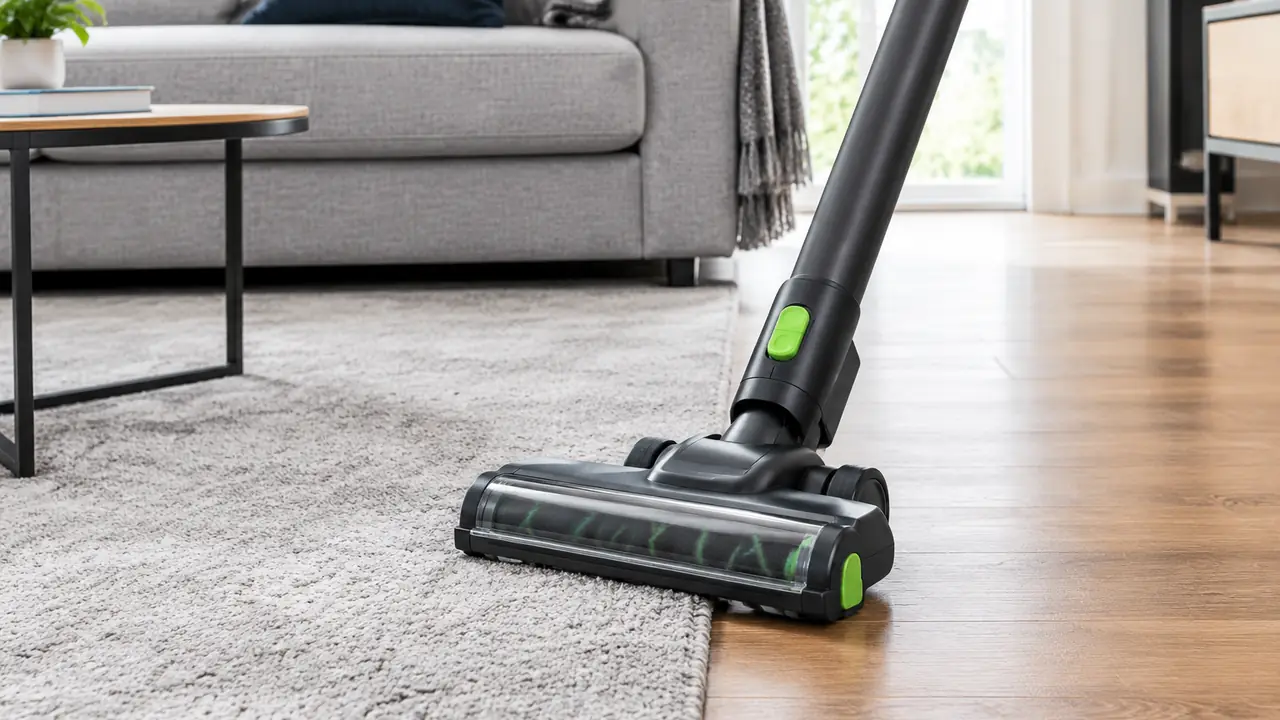
On a mattress, there is no pile to stir but there is a weave to work. A flat head with a firm skirt keeps airflow across the surface. A beater or a vibrating pad loosens fine dust in the fabric, and a soft edge prevents snagging. The head often carries an indicator light that shows when the bin or filter needs attention. A larger head covers a bed in fewer passes but needs more airflow; a smaller head works better on a handheld motor. Brushes and pads wear, so a spare head belongs in the parts list. The hose and attachments page lists the options, and brush rolls cover motorised heads.
Filter care and replacement
A fine filter only works while it is clean and seated. Fabric dust loads the pre-filter quickly, so the manual should state the interval for washing or replacing it, and the filter should be removable without tools. A washable pre-filter must be dry before it goes back, and the manual should say so. The main HEPA-class cartridge is normally replaced rather than washed. A sealed filter lock, a visible clogging indicator and a printed replacement code on the carton all help the customer keep the machine at the grade on the label, and they create a repeat-sale item for the retailer.
Wording that holds up in listings
For a mattress or fabric vacuum, safe wording describes the machine and not an outcome. Use statements such as: filter grade H13 under EN 1822; sealed airpath; washable pre-filter; wide fabric head; runtime in normal mode; noise in dB(A) with the measuring method. Do not state or imply medical outcomes, symptom relief, or protection from illness, and do not use comparative claims against other machines without a test report. The listing content note shows how to build a specification block, and a lab report from the partner plant can be cited with its standard and date.
Power, noise and compliance
Corded units follow IEC/EN 60335-2-2 with IEC 60335-1, or UL 1017 in North America. Cordless units add UN 38.3 transport testing and IEC 62133-2 or UL 2054 for the pack. The noise figure for a handheld varies widely by model, and a handheld that is used on a bed close to the user benefits from a stated dB(A) figure per IEC 60704-2-1; see the noise levels guide. Partner documents are verified per project, and the desk does not hold certificates; see the certifications guide.
Evidence to request from the partner plant
Because the category depends on the filter, ask for documents that support it: the filter supplier's test report with its standard and grade, a description of the seal design, and the plant's incoming and sampling inspection for filter efficiency, which is among the checks agreed per order. These are cited as supplied by the plant and verified per project; the desk does not issue them. They give the brand something precise to put in a technical file, and they protect the brand from copy that overreaches.
Planning checklist
- Choose the format: handheld for beds, stick for whole-home upkeep, canister for quiet corded use.
- Specify the head and the bin first, then the motor.
- Write the filter as an EN 1822 grade and request how the seals are tested.
- Keep copy to specifications; leave out health wording.
- Add spare heads, pre-filters and filter sets to the parts list.
- Send the brief through the quote form and use MOQ and lead time for reference quantities, confirmed in writing for each program.