
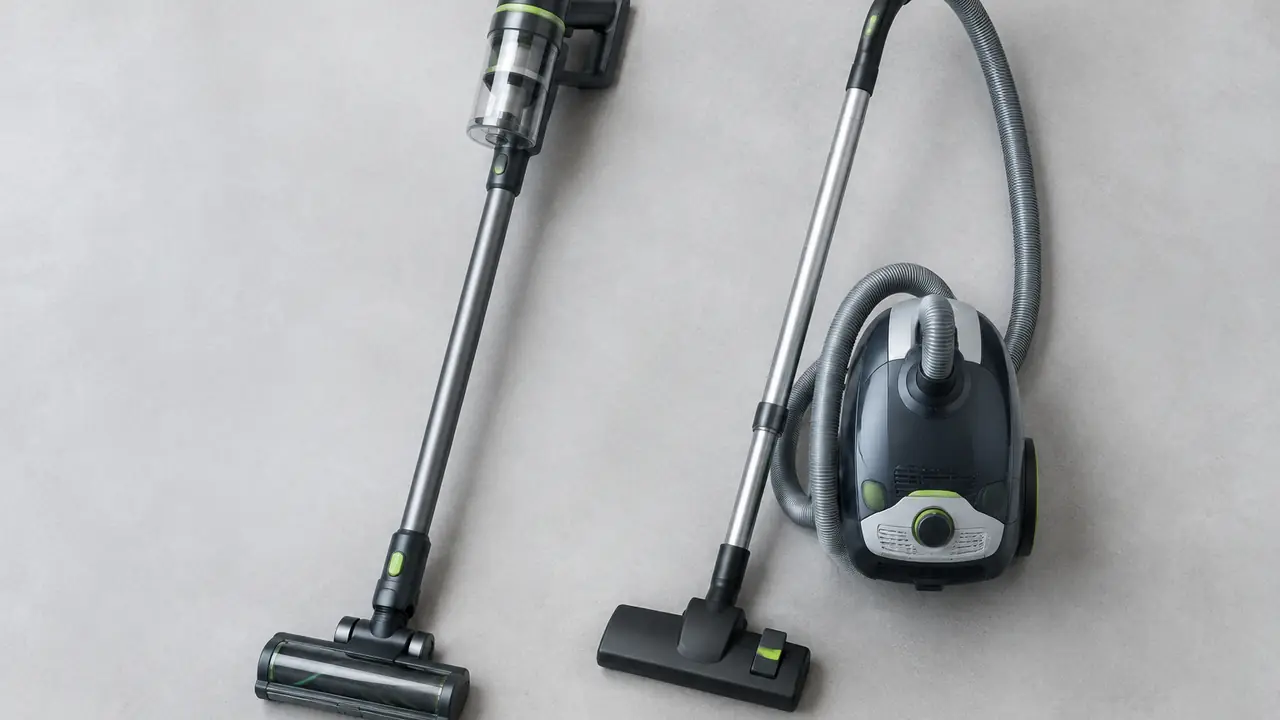
What changes when a vacuum can handle liquid
A dry-only vacuum assumes the air path stays dry. The motor, switch, filters and electronics are arranged for dust, and water in the airway would damage the motor, destroy a paper filter and create an electrical risk. A wet dry vacuum is built differently. It has a drum or tank that collects liquid below the air inlet, a float valve that shuts the airflow when the tank is full, a motor isolated from the collected material, a filter that tolerates moisture, and an electrical layout that meets the safety clauses for wet pickup in IEC/EN 60335-2-2. Those differences explain most of the cost, weight and size gap between the two types. They also explain why wet dry units are sold to workshops, garages, contractors and cleaning services rather than to homes that only sweep floors.
Side by side
| Factor | Wet dry | Dry-only |
|---|---|---|
| Performance | 1,000-1,600 W single or dual motor; tank 20-80 L; optional blower function | Household sizes by format; bag or bin; tuned for dust, hair and carpet |
| Cost drivers | Tank (stainless or plastic), float cage and valve, moisture-tolerant cartridge, sealed motor head, casters, hose set | Housing, separator, filter stack, brush head; no float or liquid protection |
| Weight and size | Heavier and bulkier; casters and a large drum | Lighter and more compact in most formats |
| Certification route | IEC/EN 60335-2-2 with wet-pickup clauses, CE LVD/EMC/RoHS, UL 1017 in North America; ATEX only as a separate path for explosive dust | IEC/EN 60335-2-2, CE LVD/EMC/RoHS, EU 666/2013 for mains household models, UL 1017 |
| MOQ reference | Commercial and industrial machines often 20-100 units; public-mould household-size units 200-500 | Public-mould about 200-500 per model; private label about 500-1,000; ODM about 1,000-3,000 plus tooling |
| Fits which buyer | Workshops, garages, contractors, cleaning services, DIY ranges | Homes, offices and hotels with dry floors; retail chains and brands for household ranges |
The ranges are typical for the category and confirmed per model datasheet. Timing and quantities are references from MOQ and lead time, confirmed in writing for each program.
Choosing by site
The simplest way to decide is to name the site and the worst mess that will happen there. In a living room or a hotel corridor, the worst mess is crumbs, hair and the odd spill; a dry-only machine with a good brush and filter is the right tool, and it will be lighter to carry. In a garage, a basement, a car-wash bay or a building site, the worst mess is water, sludge, plaster dust and wood chips; a wet dry machine is the only machine that survives, and it should be sized by tank. A workshop with fine dust needs a dust extractor or a wet dry unit with a fine-dust filter, not a household vacuum, and the industrial dust extractor page covers the machines for continuous dust loads. The cleaning services and hospitality page shows how commercial buyers usually split their fleets.
Filters and the wet dry trap
Filter choice is where wet dry units go wrong. Paper and fine pleated filters are efficient for dust and fail when wet, while foam sleeves are suited to liquid pickup and are poor at fine dust. Many models therefore ship with two filter options, a cartridge for dry use and a foam sleeve for wet use, and users forget to swap. Owners who suck up fine dust with a foam sleeve see dust at the exhaust; owners who suck up water with a paper cartridge destroy it. A good specification names both filters, labels them clearly and states the EN 1822 grade where a fine-dust filter is claimed. A float valve that sticks or foams over is a frequent cause of service calls, and a float or seal kit belongs on the spare list; the vacuum filter and HEPA page and the blog note on float valve and foam problems go through the options.
Cost without prices
A wet dry machine costs more than a dry-only machine of the same motor power because it has more material and more parts: a large tank, a float assembly, a gasketed motor head and a hose set with bigger bore. A stainless tank costs more than a plastic one and adds weight, but it takes knocks and heat better. Dual-motor versions add a second motor and a stronger head, which the next note in this series covers in single vs dual motor wet dry vacuums. A dry-only machine has fewer cost drivers and more room to differentiate on brush design, runtime and appearance. The desk does not quote prices in notes like this one; any figure is confirmed in writing for each program.
Accessories, storage and handling
Wet dry buyers often underestimate the accessory set. A drum with a wide hose, a squeegee nozzle for floors, a crevice tool, an extension wand and a blower port turns the same machine into a garage tool, a cleaning-service tool and a tool for clearing leaves, while a drum with only a bare hose sells as a lower tier. Storage matters too: a 60 L drum does not fit in a cupboard, so the lid, hose wrap and cable hooks are part of the design, and casters that jam or tip are a frequent complaint. For dry-only machines the accessory set is smaller, but the same logic applies to the brush head, crevice tool and upholstery tool. Agree the accessory list and its packaging with the partner plant early, because it changes carton size, pallet loading and the retail shelf footprint.
Risk and compliance points
- Electrical safety around liquids is the main point of the 60335-2-2 wet-pickup clauses; verify with the plant which clauses apply and that the report covers the exact model.
- A dry-only machine must not be marketed for liquids; the manual and carton should say so plainly.
- Explosive dust such as some metal powders or fine wood dust in certain conditions needs ATEX, a separate path never assumed by default.
- Weight and caster design matter for returns and for staff handling; set a target weight in the specification.
Documents come from the partner plant and are verified per project. See the certifications guide for the market routes.
What to specify
- Site and use: wet, dry or both, and the type of dust.
- Tank size in litres, material and caster design.
- Motor count and rated power; blower function if wanted.
- Filter options for wet and dry use, and the EN 1822 grade for any fine-dust filter.
- Hose diameter and length, accessory set and a spare list for filters, floats and seals.
Send the site description and quantity through the quote form and the desk will compare partner plants against one sheet. For other options by format read vacuum cleaner types explained.