
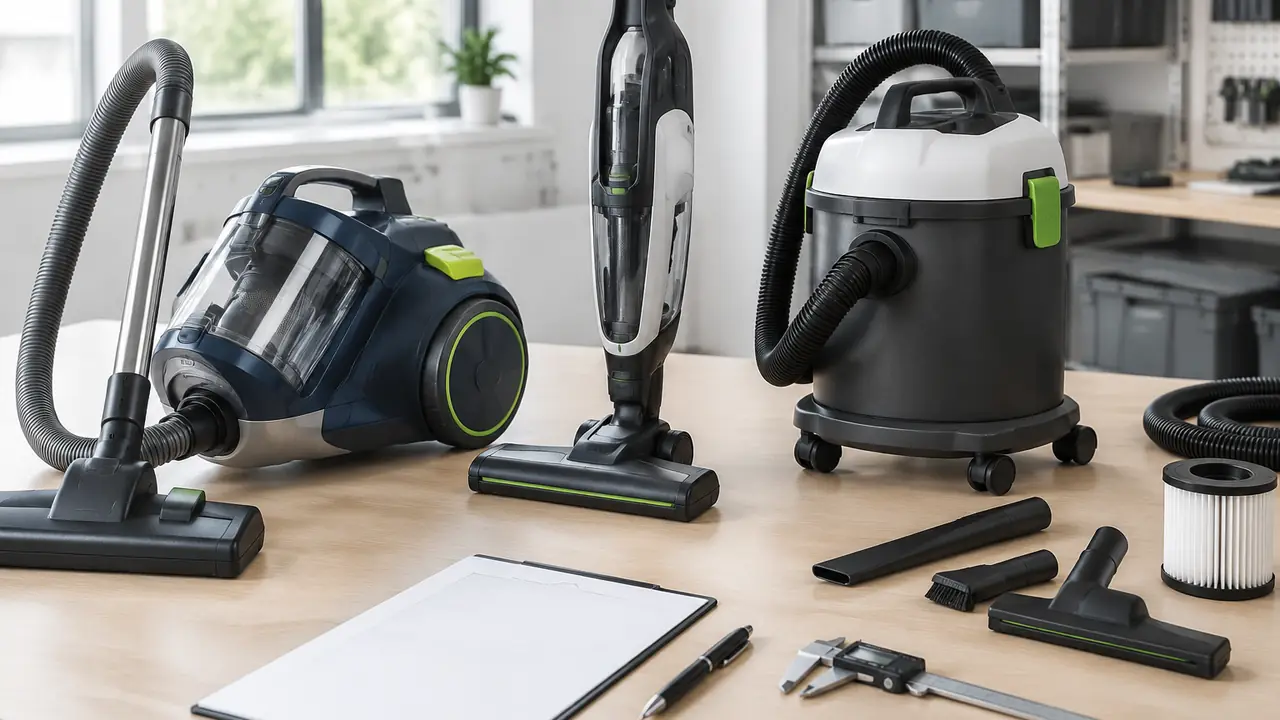
Ten steps at a glance
Vacuum cleaners combine moulded plastics, a motor, a battery or cord, filters and packaging, and each can fail on its own. The process below keeps decisions in order so that a late change does not undo earlier work. It is the same for a stick, a robot or a dust extractor; what differs is the weight of each step.
- Brief. You state the line, target market, channel, annual volume, target feature set, branding level and launch date. A one-page brief is enough; the quote form asks for exactly these points.
- Plant shortlist. The desk shortlists partner plants by cluster, motor and battery platform, certification history and audit status, usually two or three; see industry clusters and factory audit.
- BOM sheet and quotation. Each plant returns a bill of materials with options for the parts that matter and a quotation against it. Quotations are written per program; the site publishes no prices.
- Samples. Stock sample first, then branded sample, or an engineering sample for ODM, as described under OEM and private label.
- Approval. You sign off the sample, the BOM, the packaging artwork, the manual and the acceptance plan. The signed sample becomes the retained reference.
- Certification. Reports and declarations for the destination market are assembled or commissioned; see compliance and certifications.
- Production. The batch starts once the deposit and approvals are in. The desk follows the schedule and flags material or colour delays.
- Inspection. Pre-shipment checks on sampled units against the retained sample; see testing and inspection and quality control.
- Shipment. Booking, documents and loading with the forwarder; see logistics and shipping.
- After-sales. Spare parts, warranty claims and repeat orders, planned before the first batch rather than after the first complaint.
Where the time goes
Most delay comes from three places: a brief that changes after the quotation, a sample that fails a check and needs a second round, and artwork or label corrections that arrive after the box is printed. A sample round costs days to weeks, so the delay most worth avoiding is the second round; send the brief, target market and branding files together. A useful habit is to write the acceptance criteria before the first sample arrives: the runtime, noise and fit points that decide approval, each with the way it will be measured. A sample judged against a written list is approved or rejected in a day; one judged by impression tends to start a second round. Time ranges for each stage are set out on the MOQ and lead time page.
Why the BOM sheet matters
The bill of materials is the document that turns a vague brief into a comparable quotation. It lists the motor type and power, the cell format and capacity, the filter grade, the brush roll, the housing material, the accessory set and the packaging. Two plants quoting the same stick vacuum can differ materially in cost simply because one specified a branded cell and the other did not. Asking each plant to fill the same BOM template, and to mark which parts are fixed and which are options, makes the quotes comparable line by line and gives you a document to hold the plant to when the batch is built.
Who does what
| Step | Buyer | Vaculent desk | Partner plant |
|---|---|---|---|
| Brief and shortlist | Writes brief, volume, channel | Shortlists plants, checks fit | Confirms it can build the line |
| BOM sheet and quotation | Reviews options | Compares quotes, flags gaps | Issues BOM and quotation |
| Samples and approval | Tests, signs off | Coordinates, checks against brief | Builds samples |
| Certification | Provides market, labels | Collects and verifies documents | Holds or orders reports |
| Production and inspection | Approves acceptance plan | Follows schedule, inspects | Builds, tests, corrects |
| Shipment and after-sales | Customs, broker, warehouse | Coordinates with forwarder | Packs, loads, supplies parts |
What the buyer should have ready
A program moves faster when four things are ready at the brief stage: the target market and channel, because they decide the certification route and the box; a reference product or feature list, described by function rather than by brand; the logo and packaging files; and a view on volume for the first year and the first order. If a decision is not yet made, say so; the desk can present options, such as stock model first and ODM later, rather than guess. Read sourcing vacuum cleaners from China for the wider background, and for the comparison of routes see OEM vs ODM.