
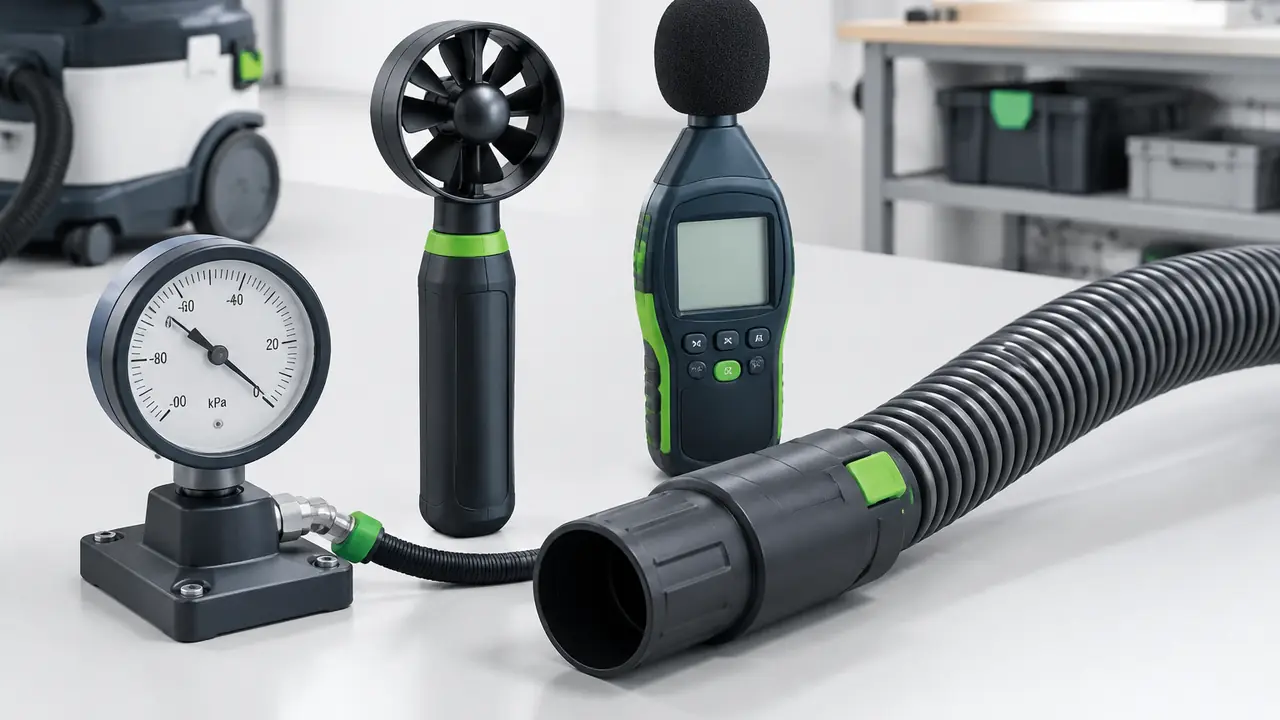
Why standard methods matter
If every plant tests its own way, every datasheet is a private statement. Two machines can be measured on different floors, with different dust, at different power modes, and the results laid side by side look comparable when they are not. International test standards exist to remove those choices. They fix the surface, the dust, the nozzle, the number of strokes, the measurement instruments and the way results are calculated, so that a laboratory in one country can reproduce the figures of a laboratory in another. For a buyer, citing the standard in a specification turns a vague claim into an auditable one.
The IEC 62885 series
IEC 62885 is a multi-part series on surface cleaning appliances, published by the International Electrotechnical Commission. It replaced an older generation of household vacuum cleaner methods and is organised by appliance type. The parts most relevant to the desk's product lines are:
| Standard | Scope | Typical use in a program |
|---|---|---|
| IEC 62885-2 | Dry vacuum cleaners for household or similar use | Stick, upright and canister performance reports |
| IEC 62885-7 | Robotic cleaners | Robot performance and coverage reports |
| Other parts of IEC 62885 | Other surface cleaning appliance types | Checked by part number for the specific product |
| IEC 60704-2-1 | Airborne noise of vacuum cleaners | Sound power level reports |
| EN 1822 / ISO 29463 | HEPA and ULPA filter classification | Filter media grade reports |
| IEC 60335-2-2 | Safety of vacuum cleaners and water-suction cleaners | Safety reports (separate from performance) |
The part number matters: a report for a dry household vacuum does not apply to a wet dry or commercial machine, and a robot has its own method. When a plant cites "IEC 62885" without a part, ask which one.
What the performance methods measure
In outline, the household methods address the following groups of characteristics, in a controlled room with defined temperature and humidity, and after conditioning the machine and the test surfaces:
- Dust removal. Standard test dust is spread on a defined carpet or a hard floor with a crevice, the machine is run over it under defined conditions, and the mass removed is compared with the mass applied. This gives the pick-up values that EU regulation 666/2013 sets as minimums for mains household vacuums: 0.75 on carpet and 0.98 on hard floor.
- Air characteristics. Airflow and sealed suction, read on a measuring rig at defined openings, as outlined in suction power vs airflow.
- Loaded performance. Performance after the dust container has been filled in a defined way, to show how much is lost as it loads.
- Input power and, for cordless, battery runtime under stated modes and conditions.
- Durability items such as the hose, cord or motor life, depending on the part and the market's requirements.
Not every item is required for every product; the buyer picks the ones that matter for the segment. The standards describe how to test; they do not set a pass mark unless a regulation or the order does.
Noise and filtration methods alongside
Noise is measured separately under IEC 60704-2-1, giving a sound power level that can be compared across machines, as set out in vacuum noise levels. Filter media is graded under EN 1822 or ISO 29463 by efficiency at the most penetrating particle size, giving H11 to H14 grades; H13 is at least 99.95% and H14 at least 99.995%. The media grade is not a whole-machine exhaust result, a point covered in HEPA filter grades explained. Safety testing under IEC 60335-2-2 is a separate stream: it tells you the machine is safe to use, not that it cleans well.
Standard methods and factory tests
Plants also run their own in-house tests: a quick airflow check on the line, a leak test on the bin, a run-in of the motor. These are production controls and useful in their own right, but they are not replacements for a standard method report. A good arrangement has three layers. First, a type test to the standard, once per model, by a third-party laboratory or the plant's accredited lab, reported with the test conditions. Second, a production check on the line, with limits derived from the type test. Third, a pre-shipment inspection by the buyer's inspector, using a sampling plan and a short list of measurable items. The quality control page describes the line and the inspection layers.
Repeatability and tolerance
Even under a standard method, two runs on the same machine will not give identical numbers. Test dust distribution, carpet wear, room conditions and operator technique all add scatter, which is why the standards specify several repetitions and a way of averaging them. A buyer should expect the same from a batch: units on the line differ slightly from each other, so a specification needs a tolerance band around the type-test figure, not a single hard number. A band that is too tight leads to rejections that reflect measurement scatter rather than quality; one that is too loose lets weak units through. Agree the band at the sampling stage, use the same method for the production check, and record both in the order so that disputes can be settled against a document.
Carpet wear deserves a specific mention. The reference carpet used for dust pick-up loses its characteristics with use, so laboratories rotate or replace it on a schedule. When two reports for the same model disagree, the first question is whether they used the same carpet batch and the same age of carpet.
How to use a lab report
- Check the standard and part number on the first page, and the date of the edition.
- Check that the model name and the configuration match the product in the order, including the nozzle and the filter.
- Read the test conditions: power mode, battery state, surface, dust load.
- Compare the results with the specification, not with another plant's marketing.
- Note the laboratory and its accreditation. If the report comes from the plant's own lab, say so in the file.
- Keep a copy of the report with the sample, and ask for a retest if the design changes.
Test methods do not predict how a particular unit will behave in the home; they are a way to make claims comparable and repeatable. The desk collects partner reports in a common file format, confirms in writing which tests are included in each order, and arranges third-party testing where a program needs one. Report costs and lead times are quoted per project. See how to read vacuum specs for the sheet side, and start a program through the quote form, or check timing on MOQ and lead time.