
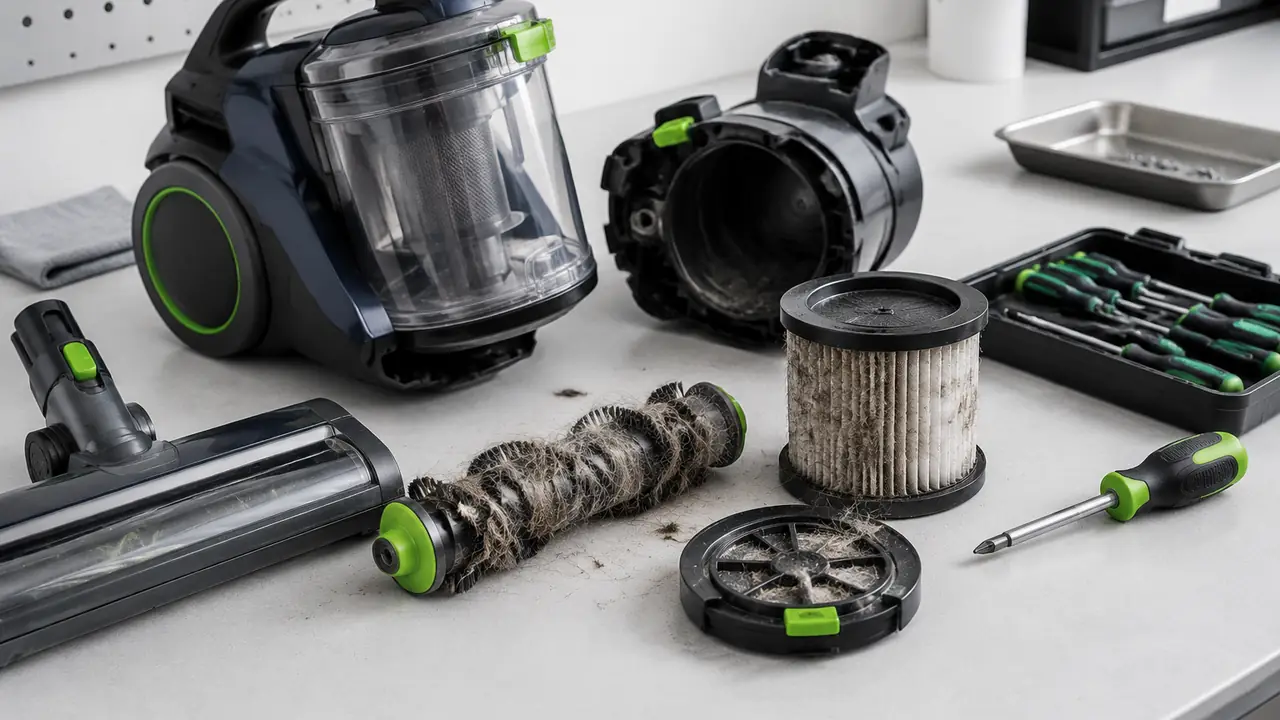
Smell is an air quality complaint
A vacuum moves a large volume of air through a box that collects what the room contained. The exhaust air passes over the same dust, hair and moisture that sit in the bin, then over a warm motor. When a user smells the exhaust, they smell the content of the machine. Smell therefore tracks maintenance more than any other fault, but design decides how forgiving the machine is: how easily a user can empty, rinse and dry it, and how much dust sits in the exhaust path.
Unlike suction or noise, odor has no test number a user can compare, so a complaint is a reputational risk that reviews amplify. A brand that understands the causes can reduce it at the specification stage.
Causes in order of likelihood
| Rank | Smell | Likely cause | Prevention lever |
|---|---|---|---|
| 1 | Stale dust, pet or kitchen smell | Old dust in bin, bag or pre-filter | Empty-bin habit, easy-open bin, washable pre-filter |
| 2 | Musty or damp | Washable filter or bin not fully dry, moisture picked up | Drying time in manual, spare filter, vented storage |
| 3 | Hot dust or burning smell | Blocked airway, motor running hot, hair on brush shaft | Airflow design, thermal protection |
| 4 | Plastic or chemical smell on a new unit | New-material outgassing, foam, adhesive, cable compound | Material specification, ventilation before packing |
| 5 | Electrical or ozone-like smell | Brush wear in a universal motor, arcing, failing board | Motor quality, abnormal-operation testing |
| 6 | Rubber or belt smell | Slipping or worn belt, stuck brush roll | Wear parts, brush roll design |
The first two account for most complaints and are fixed by cleaning. The third and fifth are early warnings of a fault and the machine should be switched off.
Checks in order
- Empty the bin or bag and wipe the inside. Fine dust clings to bin walls and exhaust screens.
- Remove and inspect all filters. Wash only those marked washable, and let them dry fully, usually for a day or more, before refitting.
- Clear hair from the brush roll and the bearing ends, where friction heat forms a burnt smell.
- Check the airway for blockage, since a blocked machine runs hot and the warm exhaust carries smell.
- If the smell is of burning or electrical origin and continues with the airway clear, stop using the unit and return it for inspection.
What it means for a brand
Bin and filter design. A bin with sharp corners, a tight seal under the lid and a fixed foam pad is hard to clean. A bin that opens fully, with a smooth interior and a removable filter cage, is easy to clean and is therefore used cleaner. Pet hair machines face this most, because hair and skin debris carry odor. The spec for a pet hair line should add an activated carbon layer as an option, listed on the filter BOM, and a bin that empties without the user touching dirt.
Filter media and sealing. A HEPA filter under EN 1822, for example H13 or H14, retains fine particles, while a carbon layer can adsorb some odor compounds. Neither should be described with health or hygiene claims that a test report does not support, and the desk keeps such wording out of listings. Careful seals prevent air from bypassing the filter, which keeps both dust and smell inside. See the filtration grades guide.
Materials and new-unit odor. A plastic or foam smell on opening is a first-impression problem. It comes from housing resin, adhesive, foam, cable sheath or the packaging film. A material list, an RoHS and REACH declaration from the partner plant, and a short ventilation step before packing reduce it. The requirement can also be added to the inspection checklist as a smell check on opened samples.
Heat and electronics. A smell of burning on a new unit should never be accepted as normal. It can indicate incompletely dried coil varnish, a contaminated component or a thermal problem, and it justifies holding the batch until the plant explains it in writing.
Returns and reviews. Odor complaints cluster in the first weeks after purchase and in humid regions, when a washable filter is rinsed and refitted damp. A short card in the box that gives the drying time and shows where the filter sits costs very little. A second filter in the carton, offered as a standard accessory for pet lines, lets the user rotate filters and removes the most common cause of a musty smell. In the listing, describe the odor controls by what the product has, such as a carbon layer or a washable pre-filter, and keep the wording factual. This also keeps the product page consistent with what a customer finds after a month of use, which is where odor reviews are written.
What to specify
- Filter structure: pre-filter, main filter, optional carbon layer, washable or replaceable, and the drying time stated in the manual.
- Bin design: opening angle, smooth interior, and dock or bag option for hygienic emptying; see dust bags and bins.
- Material declarations: RoHS and REACH documents from the plant, verified per project.
- Pre-packing ventilation or a low-odor requirement for housing, foam and adhesive.
- Spare filters sold with the unit or soon after, so users replace instead of using a worn filter.
Commercial users and odor
Hotels, offices and cleaning contractors notice odor sooner because machines are used daily and shared between rooms. For those buyers the bag or bin should be easy to change between sites, and the spec should include a stock of spare bags and filters so that staff replace rather than reuse them.
Inspection step
Odor can be checked in a pre-shipment inspection by opening a random sample from sealed cartons and running it for a few minutes. Inspectors note any burning, chemical or solvent smell and compare with the approved sample. Evidence of damp, mould or contamination in cartons is recorded with photographs. These steps are in the checklist the desk agrees with the partner plant; see testing and inspection. Packaging and storage matter too: cartons stored in humid warehouses can hold smell, so storage and container conditions are part of logistics and shipping.
To include a low-odor material requirement and a carbon filter option in a program, use the quote form.