
What a brand is actually buying
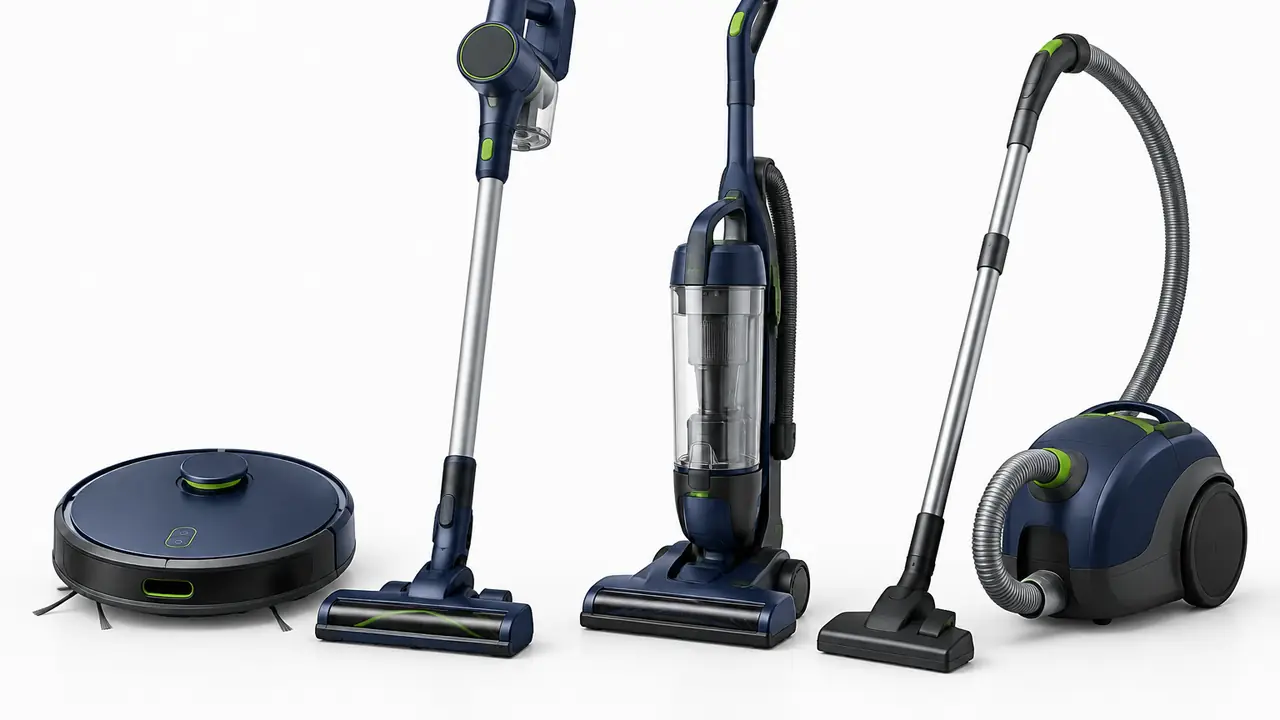
A robot vacuum looks like one product but is three: a floor-cleaning machine, a navigation and app system, and usually a dock. Hardware platforms are mature in the Suzhou and Shenzhen clusters, where several partner plants run their own mapping firmware and others integrate modules from specialist suppliers. The first decision for a brand is therefore not the shell but the platform: build on a plant's existing navigation stack and app, or fund a custom one. The first route moves in months and carries a modest minimum; the second adds software ownership, longer certification and a much larger commitment.
The desk shortlists plants by which stack they already run, because a mapping algorithm that has shipped in volume is a different risk from one that has not. Ask for the app screens, the firmware update path and the list of supported languages before you ask for a price.
Navigation: the choice that sets cost and behaviour
| Navigation type | How it works | Typical use | What to ask |
|---|---|---|---|
| Gyro and bump sensing | Random or zig-zag path, no map | Entry models, small rooms | Cliff sensor count, bumper travel |
| Camera or visual SLAM | Builds a map from ceiling or floor features | Mid-range models | Low-light behaviour, privacy handling of images |
| Laser (LiDAR) turret | Spinning range sensor builds an accurate map | Mid to high models, multi-room maps | Turret height, jam protection, map save count |
| Structured light or 3D obstacle avoidance | Detects cables, socks, pet waste | Premium models | Object list, false-positive handling |
The turret adds height, which matters for furniture clearance; the lower profile of camera models is a selling point in some markets. Obstacle avoidance is where marketing outruns testing, so request a written list of the object types the plant has tested, and run a sample against your own floor plan.
Suction, battery and runtime ranges
Typical across the category, suction on a robot is quoted at 2,000-6,000 Pa, with higher-end units above that; the figure is a sealed-nozzle reading and says little about carpet pick-up. Batteries commonly sit at 2,600-5,200 mAh and runtime at 90-180 minutes per model datasheet. Runtime depends on suction mode: a unit that lasts 180 minutes on its quiet setting may last a third of that on its strongest. Ask for runtime per mode and the recharge-and-resume behaviour for larger homes. The reasoning behind these numbers is in suction and airflow and battery runtime.
The brush system matters more than the number. A single rubber roller, a dual roller and a side brush each handle hair and debris differently, and anti-tangle designs are worth specifying if the target buyer has pets. Mopping modules vary from a passive water tank to a rotating pad that lifts over carpet; confirm the lift height in writing.
Docks: where the margin and the returns live
A dock changes the product from a gadget to an appliance. Common options are a charging-only base, a self-empty station that moves dust into a bag, and a multi-function base that also washes and dries a mop pad and refills a water tank. Each step adds a bag or tank to the spare-parts list, a pump to the failure list and weight to the freight. The dock bag is a consumable you can sell, so settle the bag format and sourcing at the same time as the robot. See dust bags and bins for the options.
- Confirm the dock's water path is sealed and drains cleanly after a power cut.
- Check that the robot returns to the dock reliably from a distant room, not only from the same room.
- Ask how the dock reports a full bag or a dry tank in the app.
App, data and after-sales software
The app is the part of a robot that the end customer touches every day, and it is the part a brand inherits as a long-term obligation. Specify early who hosts the cloud service, which regions the data sits in, how long images and maps are stored, and what happens to the app if the plant changes its platform. A privacy statement written for the app belongs in the program file next to the radio reports. Voice assistant support, scheduling, no-go zones and multi-floor maps are expectations in mid-range models; list the features you need and have the plant confirm them in writing against the firmware version that will ship.
Plan firmware updates as a service. A model sold for several years will need at least one update for bugs, and the update path must work on the first generation as well as the last. Ask how the plant tests an update before release and whether older hardware revisions are covered.
Certification route
A robot is a mains-charged appliance with a lithium battery and, in nearly every current model, a radio. For Europe that means CE under the Low Voltage and EMC directives, RoHS and REACH, and CE RED for the Wi-Fi or Bluetooth module; robot performance can be reported to IEC 62885-7. Because a robot is cordless, regulation 666/2013 does not apply. For the United States the route is FCC for the radio plus a safety listing from a recognised lab, and UL 2054 or IEC 62133-2 evidence for the pack. For shipping, the battery needs a UN 38.3 report. The desk does not hold these certificates; each plant supplies documents that are verified per project, and the certifications guide lists them by market.
MOQ, samples and what to ask a plant
As a reference range, an existing-mould model with your logo, carton and manual starts at about 500-1,000 units per model; an existing model without branding starts lower, at roughly 200-500. A new mould or a custom app is an ODM project from about 1,000-3,000 units plus tooling, confirmed in writing for each program. Samples run 7-15 working days for stock models, 15-25 days with branding and 45-90 days for engineering samples. Bulk lead time is 30-50 days for stock and branded models and 60-120 days for an ODM first order including certification. Details are on MOQ and lead time.
- Ask which navigation and app stack the plant has shipped in volume, and for the firmware update path.
- Ask for runtime per suction mode and the stated test method.
- Ask for the list of tested obstacle types and the dock failure modes already seen.
- Ask for the radio test report, the battery report and the safety report for the proposed model.
- Ask for a spare parts list: brushes, filters, side brushes, mop pads, dock bags.
Send the program details through the quote form, or read robot vs stick vacuum if you are still choosing the first line to launch.