
Why a robot has an extra layer
A corded upright is mainly a mains safety product. A robot vacuum is a battery appliance with a charging dock, motors, sensors, a processor and, in most current models, a Wi-Fi module for app control and sometimes Bluetooth for setup. Each of these brings its own rules. The appliance safety work follows the same standards as other household machines, the battery follows lithium rules, and the radio module adds regulation of the radio spectrum and of electromagnetic emissions. The radio layer is often underestimated by new brands, because it seems to be a small component, but it governs whether the product can legally be sold and whether marketplaces will list it.
CE RED in general terms
In the EU and in several associated markets, the radio equipment directive, CE RED, sets essential requirements for equipment that intentionally transmits or receives radio waves. In general terms, it addresses the health and safety of the user, electromagnetic compatibility and the efficient use of the radio spectrum. For devices with certain features, additional requirements on areas such as network protection, data protection and privacy may apply through delegated acts and their timelines; the importer should check the current position with its adviser. The route uses harmonised standards for radio, EMC and safety, and the manufacturer prepares a declaration of conformity and technical documentation. A notified body is needed only in some routes, and many Wi-Fi products follow the route based on harmonised standards.
The directive replaces the older approach of separate radio and telecom terminal equipment rules, and it covers the finished product, not only the module. A robot is therefore tested as a complete radio device, which is important when the plant says that the module is already certified.
FCC in general terms
In the United States, the FCC regulates radio frequency devices. Wi-Fi and Bluetooth transmitters are intentional radiators under Part 15, and the finished product also falls under the rules for unintentional radiators because of its digital circuits. In general terms this means that a laboratory tests emissions, the radio module must be authorised, and the product carries the required labelling or a compliance statement in the manual. The product authorisation route depends on whether the module carries a modular approval and whether the host product keeps to the conditions of that approval. The FCC route sits next to the appliance listing described in UL 1017 and ETL.
What a pre-certified module covers
| Item | Covered by the module approval | Still needed for the finished robot |
|---|---|---|
| Radio parameters | Transmit power, spectrum behaviour, antenna conditions of the module | Check that the robot keeps to the module conditions, such as the antenna type and placement |
| EMC | Module alone | Whole-product EMC testing with motors, charger and dock |
| Safety | Not covered | Appliance safety standard, battery and charger approvals |
| Documentation | Module declaration or grant | Declaration of conformity and technical file for the robot |
| Software and app | Not covered | Privacy notices, data handling and update policy by market |
Pre-certified modules reduce the radio work but never remove it. The robot needs its own EMC test because motors, switching power supplies and charging circuits are strong emission sources, and the laboratory will want to test the dock as well as the robot. As a reference, a CE route with third-party reports commonly takes about 2-4 weeks and a US route a few weeks, depending on sample readiness; the actual schedule is confirmed in writing for each program.
The dock, the charger and the battery
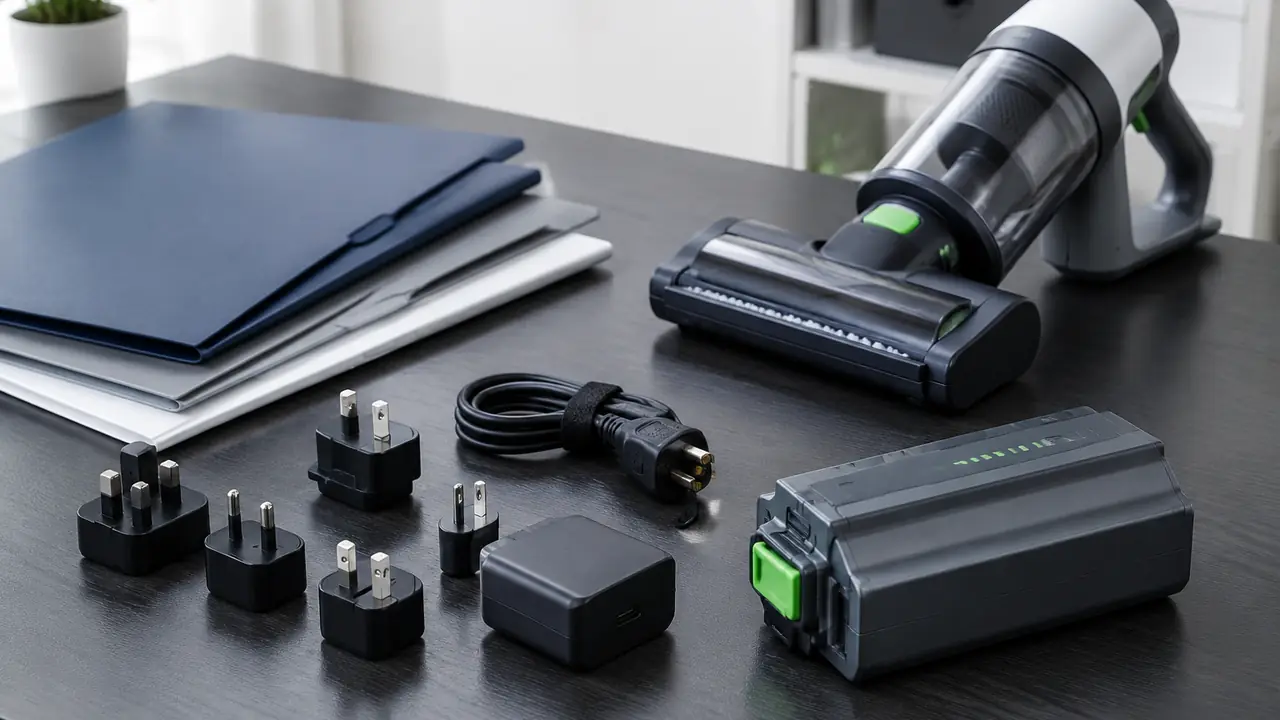
A robot is rarely a single item. The dock may contain a motor, a dust bag, a water tank and its own electronics, and it carries the charger or connects to an external adapter. All of these need to appear in the documentation. The battery pack requires UN 38.3 for transport and IEC 62133-2 or UL 2054 for pack safety, as set out in UN 38.3 and IEC 62133 battery tests. The adapter or charger should carry its own approval for each market, with the plug type, voltage range and rating label correct for the destination.
Changes after approval
Radio approvals are tied to the exact configuration that was tested. A new module revision, a different antenna, a changed housing material around the antenna or a new firmware that alters radio behaviour can all trigger a review. Plants that switch to a cheaper module mid-production, because of a component shortage, are a common source of problems for brands. The purchase order should therefore name the module and require notice before any substitution, and the final inspection should record the module marking on a sample of units.
Software, app and data
A Wi-Fi robot comes with a cloud service and an app. These are outside the usual hardware tests but are part of what the importer sells. Questions that tend to arise include where the data is stored, what the privacy notice says, how firmware updates are delivered and how long they are supported. App store rules, consumer data law in each market and cyber security expectations for connected products add requirements that change over time. The desk coordinates the hardware side with the partner plant; software and data obligations are best reviewed by the importer's legal adviser, and the desk does not give legal advice.
What to request from the plant
- The module model and its approvals for the target market, with the grant or declaration.
- The radio and EMC test reports for the finished robot, and for the dock if it is a separate powered unit.
- The appliance safety report for the robot, the dock and the charger.
- The battery documents: UN 38.3 summary and a safety evaluation of the pack.
- The declaration of conformity and the list of standards used, with edition years.
- The manual and the label showing the compliance statements for the market.
Where the desk fits
The desk shortlists partner plants that can show these documents for a comparable model, and the documents are verified per project; Vaculent holds no certificates. If a radio test must be made, it is placed ahead of the first bulk order, normally alongside the other approvals in the ODM first-order reference of 60-120 days. A model with a new design, a new module or a new antenna layout needs a fresh look. Check the full list in the certifications guide and the service description on compliance and certifications, then send your market, quantity and feature set through the quote form. Typical quantities and timing are on MOQ and lead time.