
What an HS code is
The Harmonized System is the international nomenclature for classifying traded goods. It is maintained by the World Customs Organization and used by most countries as the base of their tariff schedules. The first six digits are common; countries add further digits for their own national or regional tariff and statistical needs. A code identifies the goods on the commercial invoice, the packing list and the customs declaration, and it determines what treatment applies at the border. It is not a certification, but a mismatch between the code, the product description and the supporting documents can delay a shipment as easily as a missing certificate.
Vacuum cleaners fall under heading 8508 of the HS. Trade statistics for China's vacuum exports use this heading; for the market context see the export figures cited in the market overview. The subheadings below are references only, and the exact code must be confirmed with the broker for each product.
The subheadings buyers meet most often
| Subheading | Description in general terms | Typical products |
|---|---|---|
| 8508.11 | Vacuum cleaners with a self-contained electric motor, power not exceeding 1,500 W and a dust bag or other receptacle capacity not exceeding 20 L | Many corded household uprights, canisters and handheld mains units |
| 8508.19 | Other vacuum cleaners of the domestic type with a self-contained electric motor | Machines outside the 8508.11 limits, or where national subdivisions treat them differently |
| 8508.60 | Other vacuum cleaners | Machines outside the domestic definition, such as some industrial or commercial units |
| 8508.70 | Parts | Housings, motors sold as vacuum parts, filters, hoses, bags, brush heads |
Two features of the table need emphasis. First, the thresholds of 1,500 W and 20 L are classification limits for 8508.11; a wet dry machine with a 30 L drum or a central vacuum power unit may fall into a different line. Second, the subheadings above are the six-digit level. The national codes that follow differ by country and change over time, and different treatments may attach to them.
Where products are less obvious
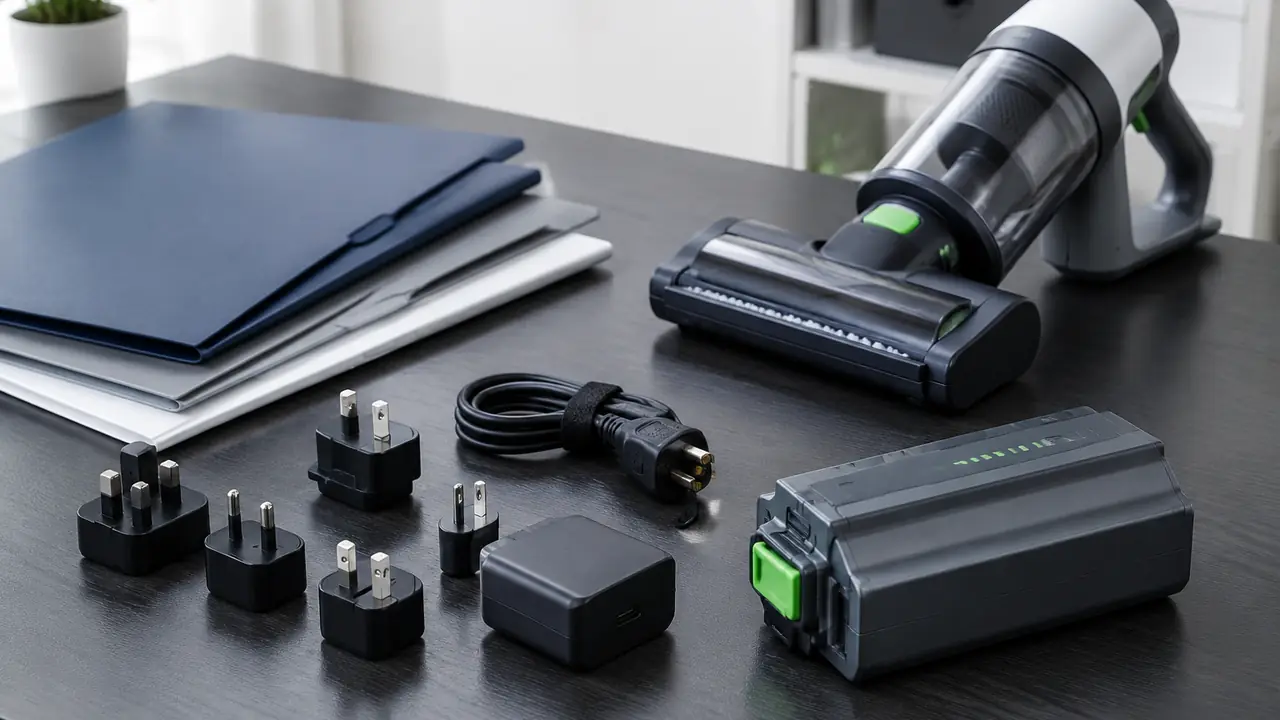
Classification is simple for a corded household vacuum and harder at the edges. Cordless stick vacuums are generally presented as vacuum cleaners with a self-contained motor, and the battery inside them is part of the machine; but when a battery pack is shipped alone as a spare, it is classified as a battery, not as a vacuum part, and falls under a different heading with dangerous goods rules. Robot vacuums are vacuum cleaners with added electronics, and a robot with a mopping function or a self-emptying dock may attract questions about whether the primary function is cleaning by suction. Wet dry vacuums, industrial dust extractors and central vacuum systems may be classified under 8508 as well, but power, capacity and design features decide the subheading. Accessories sold with the machine are normally classified with it when presented in the same set, while the same accessories sold alone may be treated as parts or as other articles. Motors sold as components follow their own headings in some cases rather than 8508.70, so the broker should confirm those too.
How classification is decided
- The description and function of the product as presented: what it is, how it is powered and what it is used for.
- The technical data: rated power, receptacle capacity, voltage, and whether the motor is self-contained.
- The General Rules of Interpretation of the HS, which set the order in which headings and notes are applied.
- The national tariff text and any binding rulings or customs guidance available in the destination country.
- The documents: catalogue, datasheet, photos and manual, which should agree with the invoice description.
The broker or customs adviser at destination makes or confirms the final choice, and the importer of record is responsible for the declaration. The desk provides the technical data and the product description from the partner plant, and aligns them with the invoice. Treat the codes in this note as an orientation, not as a ruling.
Consistency across documents
The code on the commercial invoice should match the description, the packing list, the certificates and the label. A model described as a cordless stick vacuum with a lithium battery should not appear on the invoice under a vague description such as household appliance. Include the model number, the power type, the voltage and the quantity. For parts shipments, the description should say what the part is and which machine it fits. If the invoice value, weight or carton count do not agree with the packing list, a broker may query the whole file. Under the testing and inspection stage, the desk checks that cartons and marks agree with the paperwork before release.
Codes, certificates and incoterms
The HS code is only one link in an import file. Certification documents should name the same model that is on the invoice, as described in the certifications checklist. The trade term, such as FOB or CIF, decides who pays for freight and who handles customs clearance, and it is agreed in the contract. Lithium batteries add dangerous goods declarations, covered in shipping cordless vacuums. For market-specific steps, see importing vacuums into the EU and importing vacuums into the US. The desk does not state duty rates or fees in its notes because they change, depend on origin and trade measures, and are confirmed by the broker.
What to prepare before the first shipment
- A one-page product data sheet: type, power, voltage, rated W, capacity in litres, battery details and intended use.
- A draft invoice with the description you want to use, sent to the broker for comment ahead of shipping.
- The candidate HS codes from this note, marked as references to be confirmed.
- A list of the certificates and reports that go with the model.
- The quantity, carton data and weight, so that the broker can check consistency.
Vaculent holds no certificates; partner plant documents are verified per project. For a project brief including target markets, use the quote form, and check reference quantities and timing on MOQ and lead time. The desk confirms freight and documents in writing for each program.